

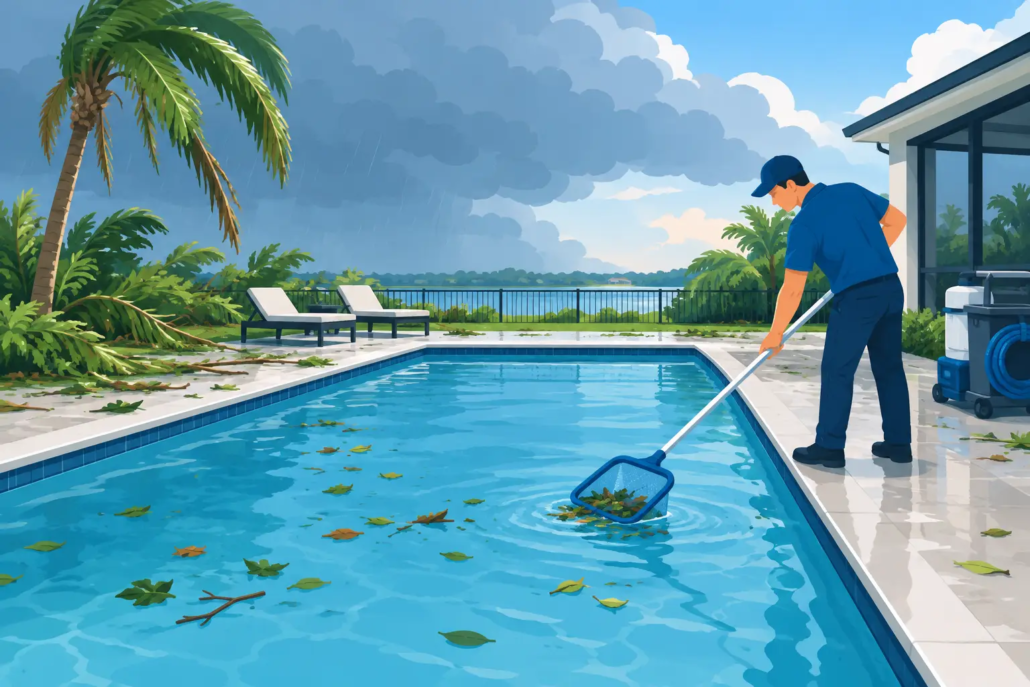
A Central Florida storm can turn a clear pool into a leaf-filled, cloudy mess before the patio dries. Pool storm cleanup is more than skimming debris off the surface. Rainwater, runoff, organic material, and power interruptions can all affect water balance, circulation, and equipment safety. Taking the right steps early helps protect the pool your family, guests, residents, or tenants rely on.
Pool Storm Cleanup Starts With Safety
Before touching the water or pool equipment, look for downed power lines, damaged electrical connections, broken glass, loose screens, and fallen branches. If there is any chance electrical equipment was exposed to flooding or damage, do not restart the pump. A qualified pool professional or electrician should inspect the system first.
Keep children and pets out of the pool until the cleanup is complete. Storm debris can hide sharp objects, and murky water makes it difficult to see the bottom. If the water is green, brown, or heavily clouded, treat it as unsafe until circulation and chemical readings are back where they should be.
For commercial pools and managed properties, a temporary closure is often the responsible choice. Clear water and visible drains are basic safety expectations, but proper sanitizer and circulation levels matter just as much.
Remove Debris Before It Creates Bigger Problems
Leaves, seed pods, pine needles, mulch, and roof grit do not just make a pool look neglected. As organic debris breaks down, it consumes chlorine and adds phosphates that can support algae growth. Heavy debris can also clog skimmer baskets, block pump flow, and put unnecessary strain on the equipment.
Start with the largest debris. Use a leaf rake rather than a flat skimmer net if the pool has a heavy load of wet leaves. Empty the skimmer and pump baskets as needed, but only after confirming the system is safe to operate. Check the pool deck and surrounding drainage too. Material left around the coping can blow or wash right back into the water.
If branches or storm debris damaged the pool enclosure, avoid dragging sharp materials across the deck or liner. Vinyl liners, pool finishes, tile, and plumbing can all be damaged by rushed cleanup. A careful approach costs less than repairing a tear, crack, or broken fitting later.
Do not vacuum heavy debris through the filter
A small amount of fine debris can be vacuumed normally once circulation is stable. Large amounts of dirt, leaves, or sediment should be removed by hand or vacuumed to waste when the system allows it. Sending too much storm debris through the filter can reduce flow quickly and leave the pool cloudy for days.
Test the Water After the Storm Passes
Rain itself is not always the problem. The bigger issue is what the rain carries into the pool and how much it dilutes the existing water chemistry. A hard storm can lower chlorine, shift pH and alkalinity, introduce contaminants, and raise the risk of algae.
Test free chlorine, pH, total alkalinity, cyanuric acid, and calcium hardness once the pool is clear enough to circulate properly. In most cases, sanitizer should be restored first, then pH and alkalinity can be adjusted carefully. Adding several chemicals at once without testing can create a different problem than the storm did.
For pools with visible algae, a chlorine reading that is low or absent, or water that has turned from cloudy blue to green, basic maintenance chemicals may not be enough. The pool may need a more complete recovery plan with brushing, filtration support, targeted treatment, and repeat testing. Waiting for algae to clear on its own usually means more chemical demand and more time without a usable pool.
Watch for cloudy water after the pool looks clean
A pool can look better after surface debris is removed but still have water-quality issues below the surface. Fine sediment, pollen, and organic contaminants can make water hazy even when the bottom is visible. Keep circulation running as long as the equipment is operating safely, and clean or backwash the filter according to its type and condition.
Do not assume more chlorine is the only answer. Cloudiness may be caused by poor filtration, an overloaded cartridge or sand filter, imbalanced water, or early algae growth. The right correction depends on the test results and the condition of the equipment.
Check the Pump, Filter, and Water Level
Once it is safe to do so, inspect the pool equipment area for standing water, loose lids, unusual noises, leaks, or low pressure. A storm can knock a timer out of schedule, trip a breaker, or fill baskets quickly enough to reduce circulation. If the pump is running dry, shut it off and correct the water level before restarting it.
A pool that overflowed may need the water level brought back to the middle of the skimmer opening. If the level is too high, the skimmer cannot pull surface debris efficiently. If it is too low, the pump can pull air and lose prime. Do not drain a pool significantly just because it received heavy rain. High groundwater is common in Central Florida, and draining too much water can create serious structural risks.
Inspect the filter pressure after cleanup. A pressure increase often means the filter is doing its job by catching storm debris, but it also means it may need cleaning. Cartridge filters should be rinsed thoroughly when dirty, while sand and DE filters require the correct cleaning or backwash procedure. If you are unsure which system you have or what the pressure should normally be, it is better to ask before making an adjustment.
When a Storm Calls for Professional Pool Service
Some storm cleanup can be handled by hands-on pool owners, especially when the water remains clear and the equipment is running normally. Other situations need prompt professional attention: visible algae, brown or black water, damaged equipment, electrical concerns, a flooded equipment pad, recurring cloudy water, or a pool that cannot hold a chlorine reading.
For landlords and property managers, reliable documentation also matters after severe weather. A service report with photos can show that the pool was inspected, cleaned, treated, and returned to an appropriate condition. That level of communication helps protect residents and keeps maintenance decisions clear.
Pro Backyard Pool can help Orlando-area homeowners and managed properties choose the right level of care, from chemical-only support for active pool owners to complete weekly service and green-pool recovery. The goal is not simply to make the water look better for a day. It is to restore healthy circulation, balanced chemistry, and the clear, clean pool environment people expect.
Prevent the Next Storm From Setting You Back
Storms are part of pool ownership in Florida, but a consistent maintenance routine limits the aftermath. Keep baskets clear, maintain proper sanitizer and stabilizer levels, trim back overhanging landscaping, and make sure the equipment area drains well. During the rainy season, check the pool more often after afternoon storms, even if weekly service is already scheduled.
A covered pool still needs attention. Covers can collect water and debris, while wind can push contaminants around the edges. Screen enclosures reduce large debris but do not prevent rain dilution, pollen, or algae conditions.
The best time to address a storm-related water problem is while it is still a small one. A quick inspection, accurate testing, and dependable follow-through can keep a rainy afternoon from taking away a week of pool time.








Leave a Reply
Want to join the discussion?Feel free to contribute!