

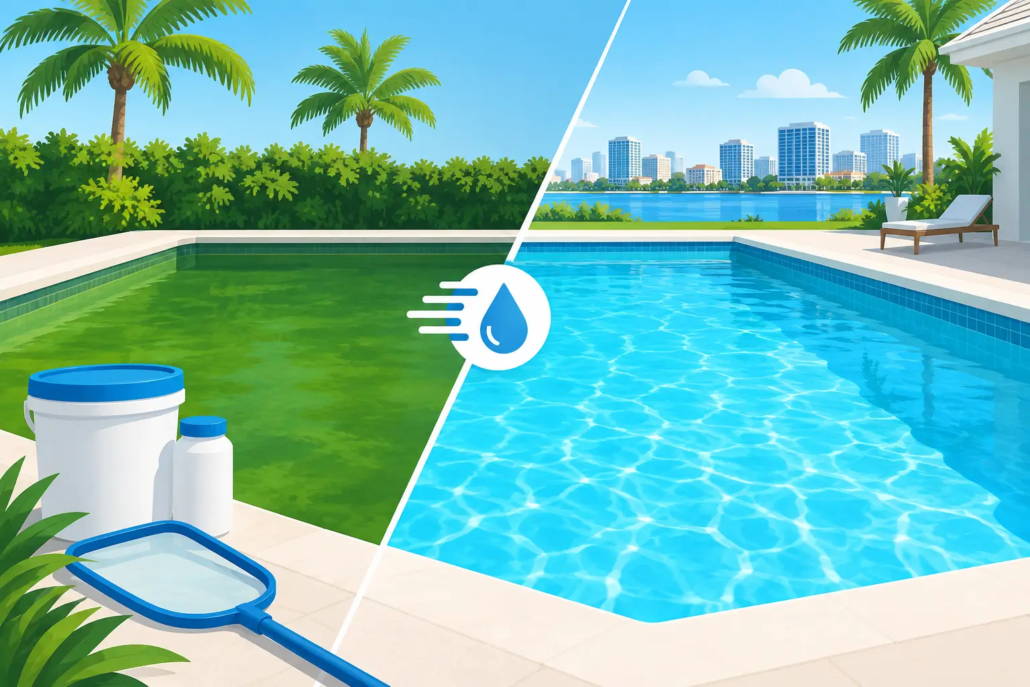
A pool can turn from blue to green faster than most Orlando homeowners expect. One heavy rainstorm, a missed service visit, failing circulation, or a stretch of hot weather can give algae exactly what it needs to spread. Effective green pool treatment Orlando homeowners rely on is not simply adding chlorine and hoping for the best. It is a focused recovery process that addresses the algae, water chemistry, filtration, and the reason the problem started.
A green pool is frustrating to look at, but it can also be unhealthy and hard on your equipment. The sooner it is treated correctly, the better the chance of returning it to clear, comfortable water without turning a manageable issue into an expensive repair.
Why Orlando Pools Turn Green So Quickly
Central Florida pools work harder than pools in many other parts of the country. Warm temperatures, strong sun, humidity, frequent rain, pollen, leaves, and heavy pool use all affect water chemistry. Chlorine is consumed faster when temperatures rise, and rain can dilute chemicals while adding debris and contaminants to the water.
Algae takes advantage when sanitizer levels fall too low or water circulation is weak. It may begin as a faint green tint along the steps or walls, then quickly spread until the entire pool looks cloudy, dark green, or swampy. Yellow-green algae often clings to shaded surfaces, while darker green water can point to a more established bloom.
Not every green-looking pool has the same cause. Pollen, metals, or suspended debris can affect water color too. That is why testing matters before treatment begins. The right plan depends on chlorine demand, pH, stabilizer levels, phosphate load, filter condition, and whether the pool equipment is moving water as it should.
Green Pool Treatment in Orlando Starts With a Full Assessment
A fast recovery begins with identifying the condition of the pool instead of using a one-size-fits-all chemical dose. A professional technician checks the water, inspects the filter and circulation system, and looks for visible algae on the floor, walls, steps, and behind ladders or fixtures.
Large debris should be removed before intensive treatment. Leaves and organic material continuously feed algae and use up sanitizer, so treating water without clearing debris can slow the recovery. The pool is then brushed thoroughly to break algae loose from surfaces. This step matters because algae can form a protective layer that makes chemicals less effective.
Next comes carefully measured chemical treatment. The goal is to raise sanitizer to the appropriate level, correct water balance, and use the right treatment solution for the type and severity of algae present. Adding too little can leave algae alive and ready to rebound. Adding products without testing can create other problems, including cloudy water, scale, corrosion, or wasted chemicals.
Filtration is just as important as chemistry. Once algae is killed, the filter must capture the remaining particles. Depending on the pool and filter type, this may require extended run time, cleaning cartridges, backwashing, or clearing a clogged filter. A pool may look better after the first treatment but still need follow-up service to remove dead algae and restore a true crystal-clear finish.
For many standard algae recoveries, clear water can be restored within 48 hours. Severe neglect, heavy debris, damaged equipment, or a filter that cannot keep up may take longer. Clear communication about those conditions helps homeowners know what to expect rather than making promises the pool cannot realistically meet.
Do Not Swim in a Green Pool
It is best to keep swimmers out until the water is clear, balanced, and properly sanitized. Green water can reduce visibility, making it difficult to see the pool floor or identify a person in distress. Algae itself is not always the only concern. Low sanitizer levels can allow bacteria and other contaminants to build up in the water.
Avoid assuming that the water is safe just because it starts looking lighter after treatment. A pool should be retested after recovery, and circulation should be functioning correctly before family members, guests, tenants, or residents return to the water.
When DIY Treatment Makes Sense – and When It Does Not
Hands-on pool owners can manage a mild algae issue when they have a reliable test method, working equipment, time to brush and vacuum, and a clear understanding of their pool’s chemistry. Consistent testing and correct dosing can stop a small problem before it becomes a full green-pool recovery.
The trade-off is that algae treatment often takes more attention than expected. A homeowner may need to test repeatedly, brush every surface, empty baskets, monitor filter pressure, vacuum debris, and keep the pump running long enough to clear the water. Guessing with chemicals can delay results and increase costs.
Professional service is often the better choice when the water is dark green, the pool has been neglected, visibility is poor, equipment is not performing normally, or the pool serves renters, guests, or a larger community. Property managers especially need dependable documentation and consistent follow-up, because a closed or unattractive pool affects residents and visitors right away.
Pro Backyard Pool provides green-pool recovery with certified, insured service and clear post-service updates. That means customers can see what was completed, understand the condition of their water, and make informed decisions about ongoing maintenance after the pool is restored.
Preventing the Next Algae Bloom
A recovered pool needs a maintenance plan. Without one, the same conditions that caused the algae can return within weeks. Regular chemical balancing keeps sanitizer available, while weekly cleaning removes the debris and early growth that can overwhelm the water after a stormy week.
The most reliable prevention comes down to four connected habits:
- Maintain proper sanitizer and balanced pH, alkalinity, and stabilizer levels.
- Run circulation long enough for your pool size, weather, and bather load.
- Brush surfaces, empty baskets, and clean or service the filter as needed.
- Test and respond after heavy rain, parties, landscaping debris, or unusually hot weather.
The right service level depends on how involved you want to be. Chemical-only service can work well for owners who enjoy skimming, brushing, and handling the physical upkeep themselves but want professional water balancing. Full weekly service is a better fit for busy families, landlords, and owners who want the pool cleaned, checked, and maintained without adding another task to the weekend.
For commercial and managed properties, consistency is especially valuable. Scheduled care helps protect water quality, supports a better resident or guest experience, and catches small circulation or chemistry problems before they lead to a closure or a costly recovery.
What Clear Water Should Look Like After Treatment
A properly recovered pool should be more than lighter in color. You should be able to see the main drain clearly, the walls should feel clean rather than slick, and the water should remain balanced after normal pump operation. Cloudiness, recurring green patches, unusually high filter pressure, or chlorine that disappears quickly can signal that algae or an underlying circulation issue is still present.
After a green pool recovery, watch the water closely for the next several days. This is when a dependable maintenance routine makes the difference. Clear water is easier to maintain than it is to rescue, and regular professional attention lets you spend more time enjoying the backyard pool and less time worrying about what is growing in it.
If your pool is starting to lose its blue color, act before it becomes a larger cleanup. Early treatment protects your water, your equipment, and the relaxing pool time your home or property should provide.








Leave a Reply
Want to join the discussion?Feel free to contribute!