A strong chlorine smell in swimming pool water can seem like proof that the pool is clean. Usually, it means the opposite. That sharp odor commonly comes from chlorine that has already reacted with sweat, body oils, sunscreen, leaves, and other contaminants. Instead of smelling like a freshly maintained pool, your water may be telling you it needs attention.
For Orlando pool owners, this can happen quickly. Warm water, frequent swimming, afternoon rain, intense sun, and heavy debris loads all affect water chemistry. The good news is that the smell is usually fixable when the cause is identified early.
What Causes a Chlorine Smell in Swimming Pool Water?
The familiar pool odor is often caused by chloramines. Chloramines form when free chlorine combines with contaminants in the water. Free chlorine is the active sanitizer that helps control bacteria and algae. Once it has done its job and bonded with contaminants, it becomes less effective and can create the irritating smell many swimmers associate with chlorine.
This is why adding more chlorine without testing first is not always the right answer. A pool can have a noticeable chlorine odor while still lacking enough active sanitizer to keep the water healthy. It can also test with a reasonable total chlorine level while the free chlorine level is too low.
The difference between total chlorine and free chlorine matters. Total chlorine includes both active free chlorine and used chlorine compounds. When the gap between those readings grows, combined chlorine or chloramines are likely building up. That is often the source of the odor.
A strong smell may be accompanied by other warning signs: swimmer eye irritation, dry or itchy skin, cloudy water, dull tile lines, or a pool that starts turning green around steps and shaded walls. These symptoms do not always appear together, but they should not be ignored.
Why Florida Pools Are More Prone to Chloramine Buildup
Central Florida pools work hard year-round. High temperatures encourage more swimming and can speed up chlorine demand. Summer storms add rainwater and organic debris, while sunny days burn off unstabilized chlorine. Even a clean-looking pool can collect pollen, grass clippings, insects, and oils between service visits.
Sunscreen is another major factor. It helps protect swimmers from the Florida sun, but it also adds compounds that chlorine must oxidize. A busy family pool after a weekend gathering may need more than a routine chlorine top-off, especially if the filter has not been running long enough or the water chemistry was already slightly out of balance.
Commercial and community pools face an even heavier bather load. When many people use the pool each day, contaminants enter the water faster. Consistent testing, circulation, cleaning, and chemical adjustment are necessary to keep conditions safe and comfortable for residents and guests.
Start With Accurate Water Testing
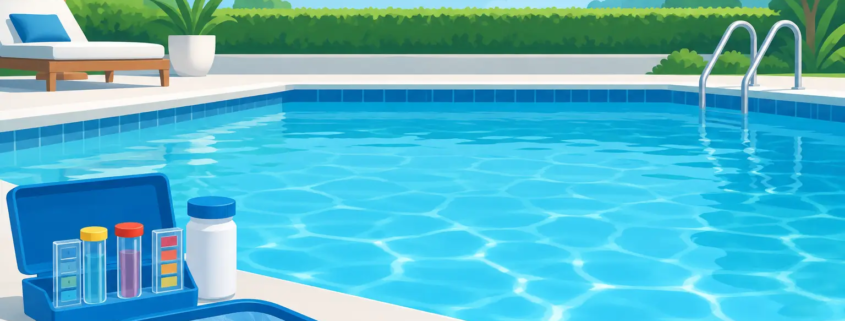
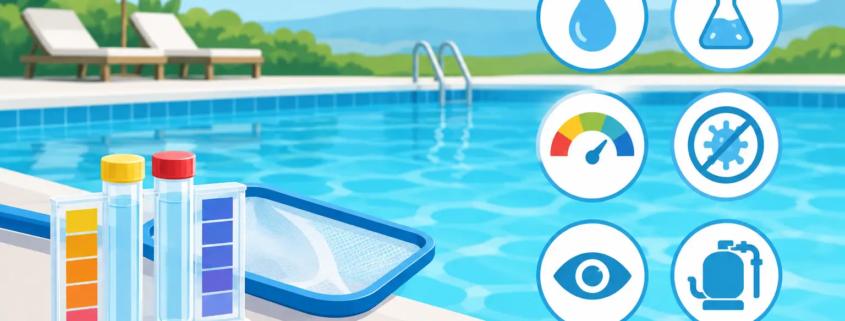
Before treating an odor, test the water. At a minimum, check free chlorine, total chlorine, pH, total alkalinity, cyanuric acid, calcium hardness, and stabilizer levels. A professional-quality test provides more useful information than relying on smell, appearance, or one basic test strip alone.
Pay special attention to the relationship between free chlorine and total chlorine. If total chlorine is noticeably higher than free chlorine, chloramines may be present. The proper correction depends on the numbers, the size of the pool, recent weather, bather load, and the sanitizer system in use.
pH is also important. If pH is too high, chlorine becomes less efficient. If it is too low, the water can become uncomfortable for swimmers and harder on pool surfaces and equipment. Maintaining balanced water gives chlorine the conditions it needs to work effectively.
For saltwater pools, remember that the salt cell produces chlorine but does not eliminate the need for testing. A dirty cell, short pump run time, high stabilizer level, or failing equipment can leave the pool under-sanitized even when the system appears to be running normally.
How to Get Rid of the Chlorine Odor
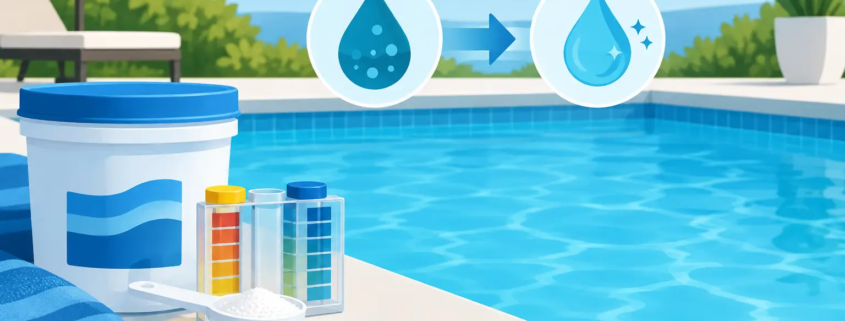
The goal is not to cover up the smell. The goal is to remove the contaminants and restore an effective free chlorine level. This usually begins with balancing the water and performing the correct type of shock treatment for the pool’s current conditions.
Shocking raises chlorine high enough to break down chloramines and oxidize built-up waste. The amount and method matter. Using too little product may not solve the issue, while adding too much or mixing chemicals improperly can create safety concerns and potentially damage surfaces or equipment.
Run the circulation system during and after treatment as directed for your pool. Good circulation distributes sanitizer, moves debris toward the skimmer and filter, and helps the treatment work throughout the entire pool. Brushing walls, steps, benches, and the waterline is also useful because contaminants and early algae growth can cling to these areas.
Clean the skimmer basket, pump basket, and filter as needed. A clogged filter or restricted circulation can keep a chemical problem from fully clearing. If the water is cloudy, visibly green, or has a persistent odor after treatment, the filter may require closer attention or the pool may need a more complete recovery process.
Always follow product labels and avoid combining chemicals. Store pool chemicals in a dry, ventilated location away from children, pets, heat sources, and incompatible products. If you are uncertain about dosage or water balance, professional testing is the safer choice.
When the Smell Means You Should Pause Swimming
A mild odor does not always require closing the pool, but strong chemical smells, eye irritation, cloudy water, or low free chlorine are signs to take seriously. Swimmers should stay out while chemicals are being added and until the water has returned to safe, balanced levels.
Cloudy water deserves particular attention because it can make it difficult to see the bottom of the pool. That is a water-quality concern and a safety issue. Do not assume clear water alone means the pool is properly sanitized, either. Testing remains the only reliable way to confirm the water is ready for use.
If someone reports burning eyes or respiratory discomfort around the pool, do not simply add fragrance, more chlorine, or a quick clarifier. Check the chemistry and circulation first. The problem may be chloramines, but it could also involve improper pH, an equipment issue, or contaminants that require a more thorough treatment plan.
Prevent Chloramine Problems Before They Start
Regular maintenance is the simplest way to prevent a chlorine smell from becoming a recurring problem. Keep the pump running long enough for your pool’s size and season, empty baskets, maintain the filter, and test water consistently. During hot weather, after storms, and following pool parties, expect the pool’s chemical demand to increase.
Encourage swimmers to rinse off before entering the pool when practical. A quick shower removes sweat, lotions, makeup, and loose debris before they become chlorine demand. This small habit can make a meaningful difference in a heavily used residential or community pool.
It also helps to remove leaves and organic debris promptly. Waiting until the next weekend to skim a pool after a storm can allow contaminants to break down in the water and consume sanitizer. Maintaining proper water level and brushing hard-to-reach areas further reduces the chance that algae and bacteria gain a foothold.
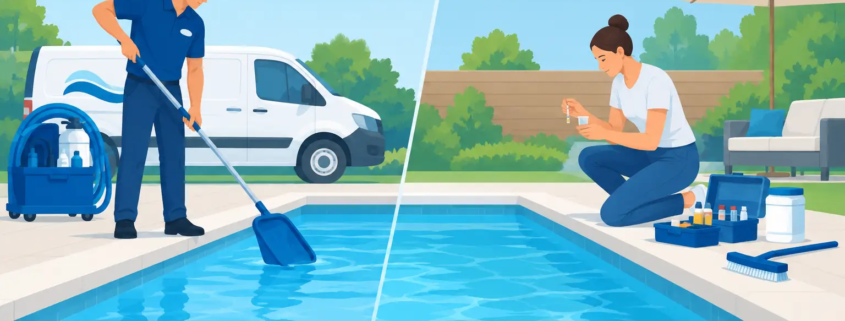
For homeowners who want to handle the physical cleaning themselves, consistent chemical management can keep the water balanced without the guesswork. For busy families, landlords, and property managers, weekly full-service care provides regular cleaning, testing, chemical adjustments, and early equipment checks before small problems become expensive ones.
A Fresh-Smelling Pool Is a Better Sign
A properly balanced pool may have a light, clean scent, but it should not have a harsh chemical odor that overwhelms the backyard. The best sign of healthy pool water is not the strongest chlorine smell. It is water that stays blue, clear, comfortable, and properly sanitized for the people who use it.
If the odor keeps returning, do not keep treating the symptom. Have the water tested, check circulation and filtration, and address the source of the chlorine demand. Pro Backyard Pool helps Central Florida homeowners and property managers keep water clear, clean, and ready to enjoy, so the pool feels like the relaxing part of the property again.