

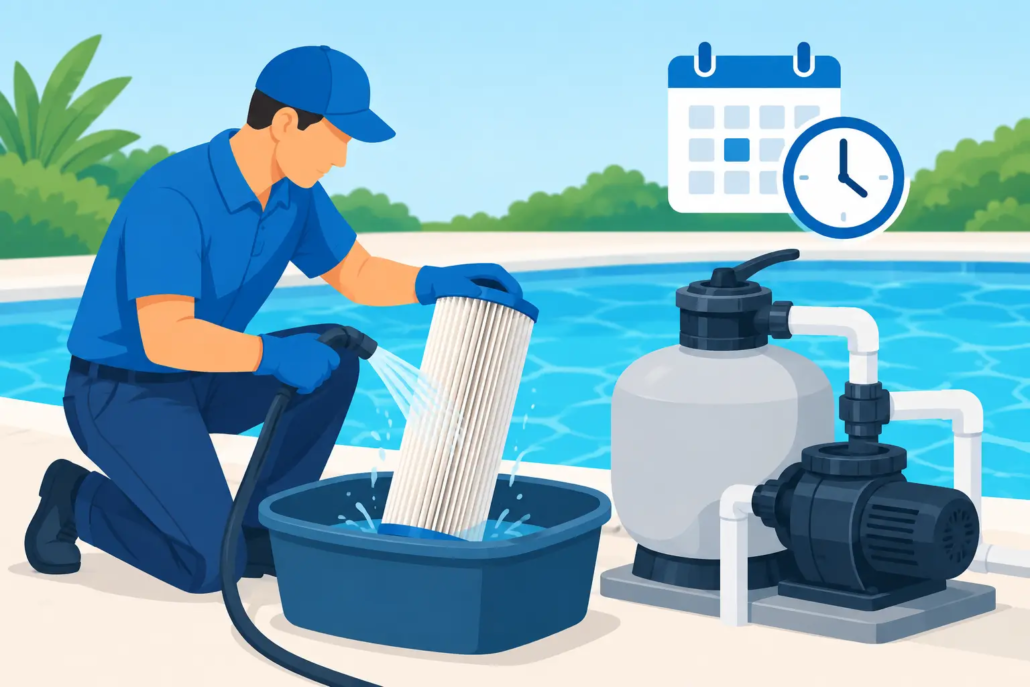
A pool can look clear at the surface while its filter is working far harder than it should. In Central Florida, frequent swimming, windblown debris, heavy rain, pollen, and long swim seasons put steady pressure on pool equipment. A professional pool filter cleaning service removes the buildup that routine skimming cannot reach, helping your water stay clear, your circulation stay strong, and your equipment avoid unnecessary strain.
For homeowners who want to enjoy the backyard instead of troubleshooting cloudy water, filter care is one of the most valuable parts of a smart maintenance plan. It is not just an equipment task. It supports healthy water, efficient chemical use, and the reliable pool conditions your family expects.
Why a Clean Filter Makes Such a Difference
Your pool filter catches the fine debris that passes through the skimmer basket. That may include dirt, pollen, leaves, algae particles, sunscreen residue, and other contaminants too small to remove by hand. Over time, this material collects inside the filter and slows water flow.
When circulation drops, chemicals do not move evenly through the pool. Dead spots can develop, water may begin to look dull, and algae has a better chance to take hold. The pool pump also has to work harder to push water through a restricted filter, which can add wear to a system that should be running efficiently.
A clean filter gives your circulation system room to do its job. Water moves through the pool more effectively, debris is captured properly, and your sanitizer can work as intended. That helps create the blue, clear, clean water that makes a pool enjoyable.
Signs Your Pool Filter Needs Attention
The calendar is useful, but your pool often gives clearer clues that cleaning is due. One common sign is a higher-than-normal pressure reading on the filter gauge. Every pool has its own normal operating range, so the key is watching for a meaningful increase from the usual reading.
Cloudy water is another warning sign, especially when chemical readings appear balanced. If the water is holding a hazy look after brushing, vacuuming, and proper treatment, a dirty or clogged filter may not be removing fine particles effectively.
You may also notice weaker return flow, debris that keeps circulating instead of clearing, or a pool that turns green more quickly after rain or heavy use. These signs do not always point to the filter alone. A circulation issue, chemical imbalance, or developing algae problem can produce similar symptoms. Still, inspecting the filter is a practical place to start.
For cartridge systems, visible discoloration or heavy debris in the pleats is a direct signal. For sand filters, a backwash that does not restore normal flow may indicate the media needs deeper cleaning or replacement. DE filters need careful handling because their grids and internal components require proper cleaning and recharging.
How Often Should a Pool Filter Be Cleaned?
There is no single schedule that fits every Orlando pool. The right timing depends on the filter type, bather load, landscaping, weather, and how consistently the pool receives professional maintenance.
Most residential cartridge filters benefit from a thorough cleaning about every three to six months. A pool surrounded by mature trees, used frequently by a large family, or recovering from algae may need service sooner. Sand filters are often backwashed as pressure rises, while a deeper cleaning may be needed periodically to remove oils and compacted debris. DE filters typically require routine backwashing and periodic full breakdown cleaning, including inspection of grids and internal parts.
A pool that has recently gone green deserves special attention. Algae can clog a filter quickly, even after the water appears clear again. Without cleaning the filter, residual algae and fine debris can remain in the system and contribute to another water-quality problem. This is one reason green-pool recovery should address circulation and filtration, not just surface appearance.
Commercial pools, rental properties, and community pools may require more frequent checks because higher use creates more demand on the filter. Consistent records are especially useful in these settings. They help property managers identify changes in pressure, flow, and water clarity before guests or residents notice a problem.
What Professional Filter Cleaning Includes
A proper pool filter cleaning service is more than rinsing off what is visible. The exact process depends on the equipment, but it should begin with a review of the pool’s circulation, pressure, and water condition.
For cartridge filters, a trained technician removes the cartridges, rinses the pleats carefully, and checks for tears, crushed areas, damaged bands, or worn end caps. When oils, scale, or embedded debris are present, a deeper cleaning may be needed. The cartridges are then reinstalled correctly so water cannot bypass the filter media.
Sand and DE filters require a different approach. A technician can inspect the tank, valves, laterals, manifolds, grids, and seals as appropriate for the system. This matters because a filter can appear to run while an internal component is damaged or out of place. In those cases, water quality may suffer even when the pump is on schedule.
Professional service also creates an opportunity to spot related concerns, such as air entering the system, leaking seals, weak pump flow, or equipment that is not operating within its normal range. Addressing small concerns early is usually less disruptive and less expensive than waiting for a complete equipment failure.
The Trade-Off Between DIY Cleaning and Professional Service
Hands-on pool owners can clean some filters themselves, particularly cartridges. It can be a reasonable option when you understand your system, have the time, and are comfortable following the manufacturer’s handling instructions. Regular homeowner checks are helpful for catching obvious debris and monitoring pressure.
The trade-off is that filters are easy to damage through overly aggressive spraying, incorrect chemicals, improper reassembly, or missed wear inside the tank. DE systems also involve materials and procedures that require extra care. A filter that is put back together incorrectly may leak, lose pressure, or allow debris to return to the pool.
For owners on a chemical-only plan, periodic professional filter service can complement the work they do themselves. For homeowners who prefer a fully managed pool, filter checks and cleaning fit naturally into a maintenance approach designed to prevent water issues before they become stressful. The best choice depends on how involved you want to be and the condition of your pool equipment.
Protecting Your Filter Between Cleanings
A clean filter lasts longer when the rest of the pool is cared for consistently. Keep skimmer and pump baskets clear so the pump can maintain strong flow. Brush walls and steps regularly, especially around areas where algae can begin. Maintain balanced water chemistry, because scale and excess oils can shorten the time between deep cleanings.
After heavy storms, high pollen periods, parties, or visible algae, pay closer attention to filter pressure and water clarity. These events can load a filter quickly. Running the pump for an appropriate amount of time and keeping the pool properly sanitized also reduces the debris burden that reaches the filter.
Do not wait for water to become fully cloudy before taking action. A small change in flow or pressure is easier to address than a pool that needs major cleanup. This is where recurring service delivers real value: consistent observation catches patterns that are easy to miss when pool care gets pushed to the weekend.
Reliable Filter Care for Orlando Pools
Orlando pools work through heat, afternoon rain, year-round debris, and plenty of family use. That makes dependable filter care part of protecting both your water quality and your equipment investment. Pro Backyard Pool approaches maintenance with the same goal homeowners have: a pool that is ready to enjoy without uncertainty.
Whether you manage the basics yourself or prefer complete weekly care, a clean filter supports every other part of pool maintenance. Watch your pressure, respond to changes in water clarity, and schedule professional attention before restricted circulation turns into an avoidable pool problem. Your pool should be the easy part of the backyard – a clean place to relax, gather, and enjoy the Florida sunshine.








Leave a Reply
Want to join the discussion?Feel free to contribute!