

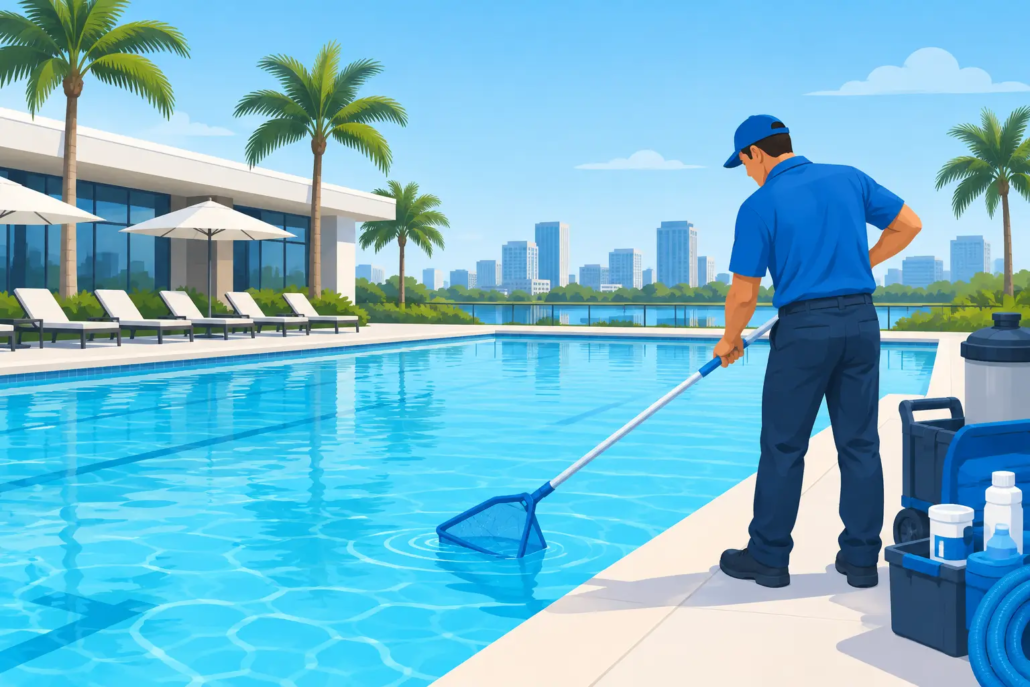
A commercial pool can look fine at 8 a.m. and become a water-quality concern by the afternoon. Heavy resident use, summer heat, afternoon storms, sunscreen, and debris all change the chemistry quickly. That is why commercial pool maintenance Orlando properties need is about more than skimming the surface. It is consistent care that keeps water clear, healthy, and ready for residents, guests, tenants, and visitors.
For an apartment community, hotel, HOA, fitness center, or managed rental property, pool conditions affect more than appearance. A cloudy pool can lead to complaints, restricted use, failed inspections, and avoidable stress for the property team. Reliable service helps prevent those problems before they interrupt the day.
What Commercial Pool Care Requires in Orlando
Orlando pools work harder than pools in many other parts of the country. Long swim seasons create steady bather loads, while high temperatures speed up chlorine demand. Frequent rain can dilute sanitizer and alter pH, and wind carries leaves, pollen, and debris into the water.
A commercial pool also has less room for inconsistency. When dozens of people use the water in a day, a small chemistry imbalance can become visible fast. Low sanitizer levels may allow algae to gain ground. Poor pH balance can irritate swimmers and reduce the effectiveness of chlorine. Neglected filters and circulation equipment can turn a minor water issue into a costly cleanup.
The right maintenance plan accounts for the actual use of the property. A quiet HOA pool may need a different service schedule than a high-traffic apartment amenity or a hotel pool that sees daily guest turnover. There is no one-size-fits-all approach, but every commercial pool needs regular testing, treatment, cleaning, and clear documentation.
Commercial Pool Maintenance Orlando Managers Can Rely On
Dependable pool care starts with a routine that covers both water quality and physical cleanliness. Weekly service should include testing and balancing the water, checking sanitizer levels, emptying baskets, skimming the surface, brushing walls and steps, vacuuming as needed, and looking for early signs of equipment or circulation trouble.
Chemical management is especially important because clear water is not always healthy water. A pool may look blue while its sanitizer level, pH, alkalinity, stabilizer, or calcium balance is outside the proper range. Regular testing allows adjustments to happen early, protecting swimmers and helping preserve surfaces and equipment.
Cleaning matters just as much. Leaves, pollen, insects, and fine debris do not only make a pool look neglected. Organic material consumes sanitizer and can contribute to cloudy water. Brushing removes buildup before it becomes a larger problem, while proper vacuuming keeps the pool floor looking cared for.
For property managers, consistency is often the real value. You should not have to wonder whether the pool was serviced, whether the water was tested, or whether a concern was found during the visit. Post-service reports and photos create a clear record of completed work and make communication easier when a board member, owner, or resident has a question.
The Cost of Waiting for a Problem
Many pool issues begin quietly. A little cloudiness, a slippery step, weak circulation, or a chlorine reading that drops faster than usual can signal a problem that needs attention. Waiting until the water turns green is rarely the least expensive option.
Algae recovery can require additional chemicals, filtration attention, brushing, vacuuming, and downtime. Equipment problems may worsen when circulation is reduced or chemistry stays out of balance. More importantly, a closed or uninviting pool takes away an amenity that residents and guests expect to enjoy.
Watch for these signs between scheduled visits:
- Water that is cloudy, dull, or no longer visibly clear to the main drain
- Green tint, yellowing walls, slippery surfaces, or recurring algae spots
- Strong chemical odors, eye irritation complaints, or unusual foam
- Low water flow, noisy equipment, leaks, or baskets that fill unusually fast
A strong service provider responds to these warning signs with a diagnosis, not guesswork. Sometimes the answer is a simple chemical adjustment. Other times, the issue may involve filtration, circulation, a high bather load, storm runoff, or a developing equipment concern. Clear communication helps managers make the right decision quickly.
Choosing the Right Service Frequency
Weekly full-service maintenance is a practical fit for most commercial pools because conditions can change rapidly in Central Florida. During periods of heavy use, extreme heat, or frequent rain, some properties may benefit from additional attention. The pool’s size, bathers, surrounding landscaping, and operating schedule all matter.
Chemical-only service can work for a property with a capable on-site team that handles daily skimming, basket emptying, and visual checks. It is a lighter-touch option, but it depends on the property having someone who will keep up with the physical cleaning. If that responsibility is unclear or inconsistent, a full-service plan is usually the better choice.
Commercial properties also benefit from having a plan for unusual events. A large party, a stretch of storms, a pump issue, or an algae outbreak may require service outside the normal routine. Knowing who to contact and how quickly the issue will be addressed removes uncertainty when the pool needs attention most.
What to Expect From a Professional Pool Partner
Commercial pool maintenance should make a property manager’s job easier. That means arriving reliably, following a consistent service process, and communicating clearly when something needs approval or further repair. It also means working with a certified and insured team that understands the responsibility of maintaining a shared swimming environment.
A good provider does not hide behind vague updates. They explain what was completed, note any concerns, and give the property team useful information. Photos after service can be particularly helpful for managers who oversee multiple locations or are not on site every day.
Modern treatment methods also make a difference when water conditions change quickly. Proper testing and targeted treatment help avoid unnecessary chemical use while keeping the pool in a healthy range. The goal is not simply to make the water look better for a day. It is to maintain stable, comfortable water that remains clear between visits.
At Pro Backyard Pool, commercial service is built around that kind of dependable care: healthy water, consistent maintenance, documented updates, and responsive support when a problem appears. For managed properties, that can mean fewer surprises and a pool area that stays ready for the people who rely on it.
A Better Experience for Residents and Guests
The pool is often one of the first amenities a prospective resident notices and one of the most-used shared spaces at a property. When it is crystal clear, clean, and well maintained, it reflects positively on the entire community. When it is neglected, people notice that too.
Reliable maintenance protects the experience around the pool, from weekend family time at an HOA to a guest’s stay at a hotel. It gives managers a practical way to protect their property, reduce avoidable complaints, and keep a valued amenity open and inviting.
A commercial pool should feel easy to enjoy, not like another unresolved item on a property manager’s list. With regular care, prompt communication, and attention to small changes, the water can stay where it belongs: blue, clear, clean, and ready for the next swimmer.








Leave a Reply
Want to join the discussion?Feel free to contribute!