

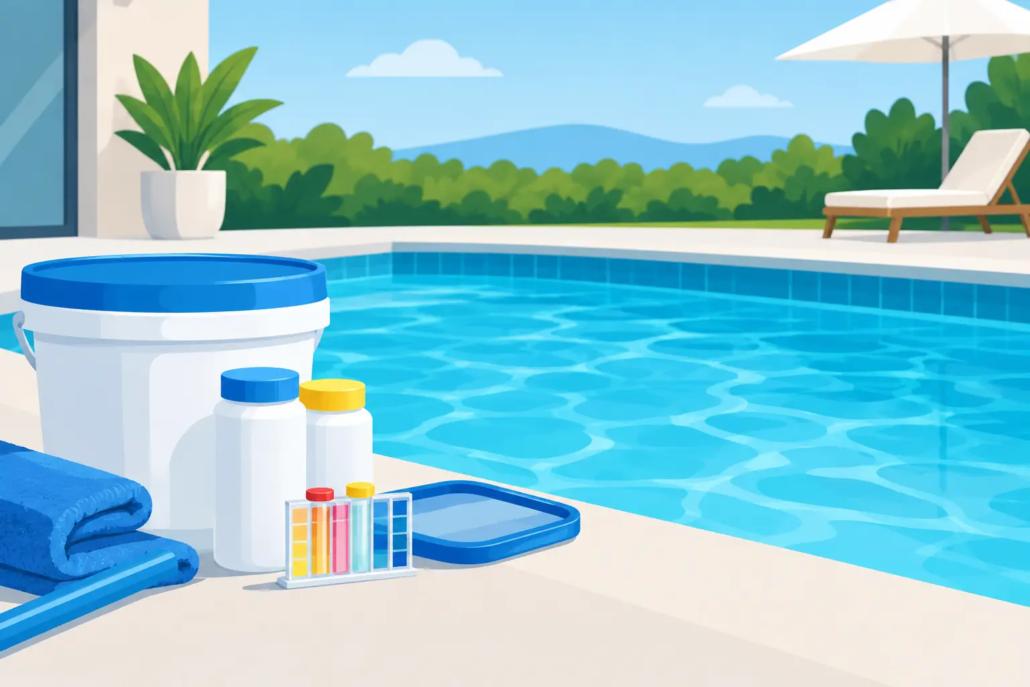
A pool can look blue from the patio and still be out of balance. In Central Florida, intense sun, warm water, afternoon rain, swimmers, and falling debris can change water chemistry quickly. Pool chemical balancing for homeowners is not about adding a little chlorine whenever the water looks dull. It is about keeping a few connected measurements in the right range so your pool stays clear, comfortable, and healthy.
For hands-on pool owners, a consistent routine prevents most surprises. For families who would rather spend the weekend enjoying the pool, professional chemical-only service can provide the same dependable water care without taking over the cleaning tasks you prefer to handle yourself.
Why balanced pool water matters in Orlando
Heat and sunlight work hard against chlorine. On a bright Orlando day, unprotected chlorine can burn off fast, leaving water vulnerable to algae before a homeowner notices a color change. Heavy rain can dilute chemicals and bring in contaminants. A busy weekend of swimming adds sunscreen, body oils, and other organic material that chlorine must break down.
When chemistry falls out of range, the result is not always a green pool. You may first see cloudy water, a strong chlorine odor, itchy eyes, scale around the tile line, or a rough pool surface. Those are signs that the water needs attention, not necessarily that it needs more chlorine.
Balanced water also protects the investment behind the pool. Low pH and low alkalinity can make water corrosive, while high calcium or high pH can create scale on tile, heaters, salt cells, and plumbing. Regular testing is less expensive than correcting a major algae outbreak or dealing with avoidable equipment wear.
The numbers homeowners should monitor
A reliable test kit or quality test strips can help you identify what the water needs. Test strips are convenient for routine checks, but a liquid drop test kit generally provides more precise readings when you are diagnosing a problem. Bring a water sample to a professional for confirmation when readings seem unusual or you are treating recurring cloudiness or algae.
Free chlorine and combined chlorine
Free chlorine is the active sanitizer available to protect the pool. Most residential pools should generally maintain free chlorine around 1 to 3 parts per million, although the right level depends on your stabilizer level, pool type, bather load, and product instructions.
Combined chlorine is chlorine that has already reacted with contaminants. If it is elevated, swimmers may notice the familiar “chlorine smell” or eye irritation. That odor often means chlorine is not working efficiently, not that the pool has too much of it. The remedy may be a properly calculated shock treatment, followed by circulation and retesting.
pH and total alkalinity
pH measures whether water is acidic or basic. A typical target range is 7.2 to 7.8, with many pool professionals aiming near 7.4 to 7.6 for comfort and chlorine performance. Low pH can irritate skin and eyes and may damage surfaces or equipment. High pH can make chlorine less effective and encourage cloudy water or scale.
Total alkalinity acts as a buffer that helps prevent pH from moving too quickly. For many pools, 80 to 120 parts per million is a workable range, though the best target can vary with the sanitizer system and surface. If pH keeps bouncing up or down, correct alkalinity first. Trying to adjust pH without addressing unstable alkalinity can become a frustrating cycle.
Stabilizer, calcium, and salt
Cyanuric acid, often called stabilizer or conditioner, helps shield chlorine from the Florida sun. Too little allows chlorine to disappear quickly. Too much can slow chlorine’s sanitizing ability and make the water harder to manage. The correct range depends on whether you have a traditional chlorine pool or a saltwater chlorine generator, so follow your equipment guidance and avoid adding stabilizer automatically.
Calcium hardness matters most for plaster, pebble, and other cement-based surfaces, but every pool benefits from appropriate levels. Low calcium can encourage water to pull minerals from plaster. High calcium, especially alongside high pH, can leave white scale. Saltwater pools also require routine salt testing. Salt itself does not replace balanced chlorine, pH, alkalinity, and stabilizer.
A practical pool chemical balancing routine
For most homeowners, test free chlorine and pH at least two or three times each week during hot weather. Test more often after a storm, a pool party, a heat wave, visible debris, or a period when the pump has not run normally. Check alkalinity, stabilizer, calcium hardness, and salt about monthly, or sooner if you are trying to solve a water-quality issue.
Take the sample away from the return jets and skimmer, ideally from elbow depth. Run the circulation system long enough each day to move and filter the full pool volume. In summer, that often means longer pump run times than homeowners expect. Chemistry and circulation work together. Adding the right chemical to poorly circulating water will not produce consistent results.
When a test shows that something is off, make one thoughtful adjustment at a time. Measure chemicals carefully based on actual pool gallons, not a guess. Add products according to label directions, keep the pump running, and allow time for the water to circulate before retesting. Pouring several products into the pool at once makes it difficult to know what caused the next reading.
Never mix pool chemicals together, even if they look similar. Store them dry, upright, and separate from one another, away from children, pets, and ignition sources. Add chemicals to water as directed, rather than adding water into a chemical container. Safety is part of good pool care.
Common mistakes that create bigger problems
The most common mistake is chasing a single number. For example, adding chlorine repeatedly when pH is high or stabilizer is excessive may not fix the underlying issue. Another is treating a green tint with algaecide alone. Algae recovery typically requires the right chlorine level, proper brushing, filtration, circulation, and follow-up testing.
Homeowners also run into trouble by making large corrections too quickly. A high dose of acid can push pH and alkalinity too low. Too much stabilizer is particularly difficult because it does not naturally disappear quickly. In many cases, reducing excess stabilizer requires partially draining and refilling water, which is a problem best avoided through measured additions.
Cloudy water is another situation where patience matters. It may come from algae beginning to grow, fine debris, poor filtration, high calcium, or imbalanced pH. Clean the filter as recommended for your equipment, brush the walls and floor, maintain circulation, and test the full chemistry picture before adding random products.
When chemical-only service makes sense
Some homeowners like skimming, vacuuming, and keeping the deck tidy but do not want the responsibility of interpreting changing chemistry each week. Chemical-only service is a practical middle ground. A trained technician can test, balance, and document the water condition while you continue handling the physical upkeep of your pool.
Full weekly service is often the better fit for busy families, rental property owners, or anyone who wants dependable cleaning and chemical management in one visit. It also helps catch small concerns early, such as a failing pump basket, an unusually dirty filter, early algae growth, or a chemistry pattern that could affect equipment.
For a pool that has already turned green, speed matters. Waiting for the water to improve on its own can allow algae to spread, clog filtration, and make recovery more expensive. Pro Backyard Pool helps Orlando-area homeowners choose between hands-on chemical support, full weekly care, and fast green-pool recovery based on the pool’s actual condition.
Clear water starts with consistent attention
Your pool water does not need constant tinkering, but it does need a routine. Test regularly, adjust carefully, keep water moving, and treat unusual changes early. That steady approach keeps your backyard pool ready for the people it was built for – the family, friends, and quiet afternoons waiting just outside the door.








Leave a Reply
Want to join the discussion?Feel free to contribute!