

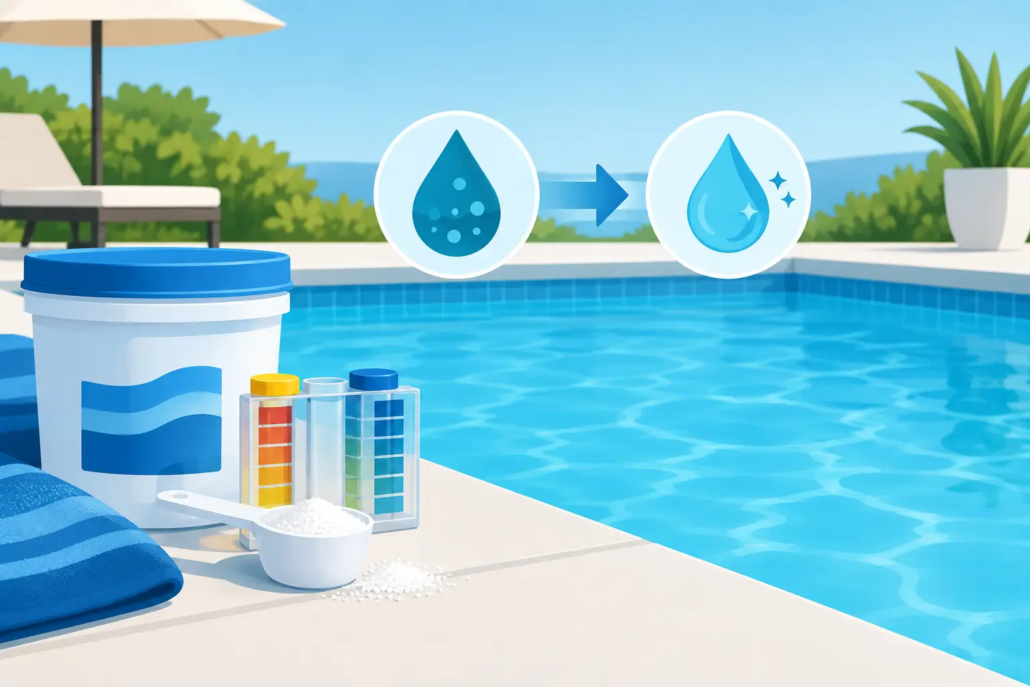
A pool can look perfectly clear and still have a chemistry problem developing underneath the surface. When total alkalinity is too high, pH becomes difficult to control, sanitizer works less efficiently, and Orlando’s heat can speed up scale buildup. Knowing how to lower pool alkalinity helps protect your finish, plumbing, heater, and the comfortable swimming water your family expects.
What High Pool Alkalinity Does to Your Water
Total alkalinity, often called TA, measures the water’s ability to resist pH changes. Some alkalinity is necessary because it prevents pH from swinging wildly after rain, swimming, or routine chemical additions. The trouble begins when there is too much of it.
For most residential pools, a total alkalinity reading of about 80 to 120 parts per million is a practical target. Some saltwater pools may perform better at the lower end of that range, but always follow your equipment manufacturer’s recommendations. The right number depends on your pool surface, sanitizer system, and the products you use.
High alkalinity usually makes pH drift upward. That can leave water feeling less comfortable, make chlorine less effective, and create cloudy water or flaky white calcium scale on tile, fixtures, and equipment. In Central Florida, where warm water, heavy use, rain, and evaporation constantly affect pool chemistry, an untreated alkalinity issue can turn into a recurring maintenance headache.
Do not rely on appearance alone. Test strips can provide a quick check, but a quality liquid test kit or a professional water analysis gives a more dependable reading when you are making chemical adjustments.
How to Lower Pool Alkalinity Safely
The standard way to reduce total alkalinity is with acid, usually muriatic acid or sodium bisulfate, often called dry acid. Muriatic acid is commonly used by pool professionals because it is effective and economical, but it must be handled carefully. Dry acid can be easier to store and measure for some homeowners, though it still requires safe handling and should be used only as directed on the label.
Acid lowers both pH and total alkalinity. Because pH can drop faster than alkalinity, the process takes patience. Adding a large amount all at once may create an unsafe pH level, damage surfaces, or put unnecessary stress on equipment.
Start with accurate water testing
Before adding anything, test total alkalinity and pH. Also check chlorine because you do not want to make major balance adjustments while sanitizer is already low. Write down your pool volume, current readings, and the strength of the acid product you plan to use. Those details determine the correct dose.
Pool volumes are frequently guessed too high or too low, especially in freeform pools. A dosing amount based on the wrong gallon estimate can lead to overcorrection. If you are unsure of the volume, it is safer to make smaller adjustments and retest.
Add acid in small, measured doses
With the circulation pump running, use a pool chemical calculator or product label to determine a conservative dose. Add the acid slowly to the deep end of the pool according to label directions, keeping it away from skimmers, steps, metal fixtures, and pool walls. Never pour acid directly into a skimmer.
Wear chemical-resistant gloves and eye protection. Work outdoors in a well-ventilated area, avoid breathing fumes, and keep children and pets away while handling chemicals. Never mix acid with chlorine or any other pool product. If dilution is called for on the product label, always add acid to water, never water to acid.
Let the water circulate thoroughly before testing again. Depending on the size of the adjustment and your circulation system, allow several hours before retesting. For substantial corrections, it is often best to test the following day rather than chasing numbers every few minutes.
Bring pH back up through aeration when needed
This is the part many homeowners miss. Acid reduces pH and alkalinity together. If pH falls below the recommended range, usually 7.2 to 7.8, aerating the water can raise pH without raising total alkalinity.
Run water features, aim return jets toward the surface, operate a spa spillover, or use an air blower if your pool has one. Agitating the surface releases carbon dioxide and gradually raises pH. Once pH returns to a normal range, test alkalinity again. If it is still too high, repeat the small acid treatment and aeration cycle.
This approach is slower than adding a heavy dose of acid, but it gives you more control and reduces the chance of creating a new chemistry problem.
Why Alkalinity Keeps Climbing in Orlando Pools
A high total alkalinity reading is often a pattern, not a one-time accident. Fill water can contain minerals that raise alkalinity over time. Frequent use of certain pH-increasing products, incorrect chemical doses, and evaporation followed by topping off the pool can also contribute.
Rainwater itself does not always raise alkalinity, but Florida’s storm season can dilute sanitizer, wash in debris, and force more frequent balancing. When the water chemistry is adjusted quickly without retesting between products, alkalinity can drift out of range.
Calcium hardness and cyanuric acid also affect how your pool behaves, even though they are separate readings. For example, a pool with high pH, high calcium hardness, and high alkalinity has a greater risk of scale. A complete water test gives a clearer picture than treating one number in isolation.
Mistakes That Make the Problem Worse
Trying to fix high alkalinity with repeated large acid doses is the most common mistake. A low pH reading may tempt you to add a pH increaser right away, which can undo the alkalinity reduction you were trying to achieve. The better approach is to use measured acid additions, circulation, and aeration in stages.
Another mistake is treating the pool when the test result is uncertain. Expired reagents, poorly stored strips, and samples taken immediately after adding chemicals can produce misleading readings. Take the sample away from a return jet and test before adding the next product.
Do not turn off circulation after adding acid. Good water movement helps distribute the treatment and protects surfaces from concentrated chemicals. It is also wise to avoid swimming until the water has circulated and pH is back in a safe range.
Finally, avoid focusing only on a “perfect” target number. A stable pool within the appropriate range is better than a pool that receives constant chemical corrections. Water balance should support clean, comfortable swimming and protect expensive equipment, not create a daily chemistry project.
When Professional Pool Service Makes Sense
A homeowner can often correct moderately high alkalinity with careful testing and small adjustments. However, professional help is worthwhile when alkalinity remains high after repeated treatment, pH will not stabilize, scale is already forming, or the pool has turned cloudy or green.
Commercial pools and managed properties should be especially cautious. Their bather load, compliance requirements, and equipment demands make consistent documentation and dependable chemistry control essential. A recurring service plan can catch rising alkalinity before it affects water clarity, chlorine performance, or guest comfort.
For homeowners who want to stay involved without handling every adjustment, chemical-only service can provide regular testing and balancing. For families who would rather simply enjoy a blue, clear, clean pool, full weekly maintenance removes the uncertainty from water care. Pro Backyard Pool helps Central Florida pool owners keep small balance issues from becoming avoidable equipment or algae problems.
A steady testing routine is the best way to keep alkalinity manageable. Check your water weekly, make one measured change at a time, and give the pool time to respond. That patient approach keeps your backyard water comfortable, protects your investment, and leaves more time for the reason you have a pool in the first place: enjoying it.








Leave a Reply
Want to join the discussion?Feel free to contribute!