

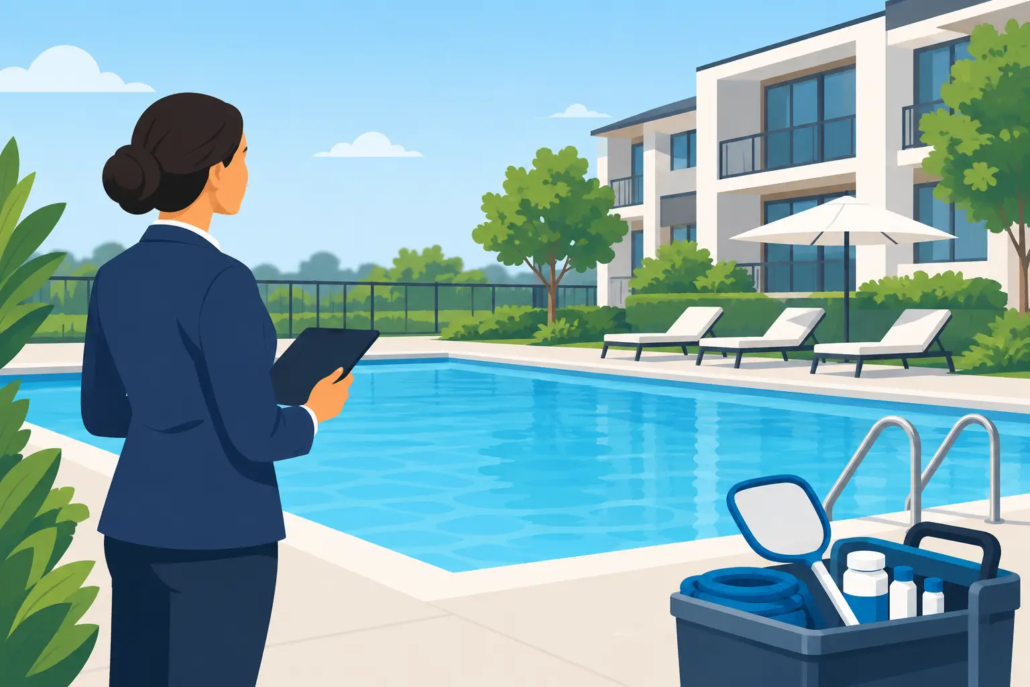
A pool can be one of a managed property’s best amenities – until cloudy water, algae on the walls, or a closed-pool sign becomes the first thing residents see. Pool care for property managers is not simply a cleaning task. It is an ongoing responsibility for water health, resident satisfaction, equipment protection, and the reputation of the property.
For apartments, HOAs, condos, hotels, and rental communities across Orlando and Central Florida, consistency matters more than a quick cleanup after something goes wrong. A dependable maintenance plan keeps the pool blue, clear, clean, and ready for the people who rely on it.
Why Reliable Pool Care Matters at Managed Properties
A residential pool may see a handful of swimmers each week. A community pool can see dozens in one afternoon, especially during Florida’s long warm season. More swimmers bring in sunscreen, body oils, debris, bacteria, and contaminants that consume sanitizer quickly. Afternoon storms, falling leaves, intense sun, and high temperatures can change water conditions even faster.
That means a pool can look acceptable in the morning and develop a water-quality issue before the next scheduled visit if its chemistry is not being monitored and managed correctly. Property managers need a service partner who understands that the goal is not just removing leaves. The goal is healthy, balanced water that supports a safe and enjoyable environment.
Consistent care also helps protect expensive pool equipment. When chemistry stays out of range, it can contribute to corrosion, scale buildup, damaged surfaces, strained pumps, and shortened heater life. Preventive maintenance usually costs far less than an emergency repair or a prolonged closure.
There is also a communication factor. Residents and guests notice pool conditions immediately, but they do not always see the work that keeps the water clear. Service reports with photos give property teams documented proof that the pool was inspected, treated, and maintained. That makes it easier to respond confidently when a board member, resident, or owner has a question.
What Commercial Pool Service Should Cover
Commercial pool care should be built around the needs of the specific property. A quiet HOA pool and a high-traffic apartment amenity have different usage patterns, but both need routine attention from trained professionals.
Water chemistry and sanitation
Proper chemical balance is the foundation of healthy pool water. Sanitizer levels must be maintained, while pH, alkalinity, calcium hardness, stabilizer, and other conditions need regular testing and adjustment. Each measurement affects the others. For example, low sanitizer can allow algae to gain ground, while improper pH can make sanitizer less effective and irritate swimmers’ eyes and skin.
Florida weather makes a set-it-and-forget-it approach risky. Heavy rain dilutes chemical levels. Strong sun burns through chlorine. High bather loads create sudden demand. Regular professional testing allows adjustments before water turns cloudy or green.
Cleaning that supports appearance and circulation
Skimming the surface is only one part of a clean pool. A complete visit may include brushing walls and tile lines, vacuuming debris, emptying baskets, checking filters, and inspecting visible equipment conditions. These tasks improve the pool’s appearance, but they also support circulation and filtration.
Brushing is especially valuable in Central Florida, where algae can establish itself on steps, corners, and shaded areas before it becomes obvious across the entire pool. Addressing early signs of growth is much easier than recovering a fully green pool.
Equipment observation and early problem reporting
Pool technicians are often the first people to spot a small issue: a noisy pump, a weak return flow, an air leak, a leaking fitting, or a filter that needs attention. Identifying concerns early gives the property manager time to arrange the appropriate repair before a minor problem becomes a service interruption.
Maintenance service is not the same as a major equipment repair program, so responsibilities should be clear from the start. Still, a professional pool provider should communicate what they observe, explain the urgency, and document conditions clearly.
Building a Pool Care Plan for Your Property
The right plan depends on bather load, pool size, surrounding landscaping, equipment age, and the expectations of residents or guests. A property with frequent activity may need more frequent service than one with limited use. The same is true for pools that receive heavy debris after storms or sit beneath mature trees.
Start with a realistic look at usage. Are residents using the pool daily? Does the property host weekend events? Is the pool a major leasing amenity? Higher use typically calls for closer chemical monitoring and more frequent cleaning. Cutting service frequency may look like a savings on paper, but it can raise the risk of water issues, complaint calls, and avoidable closures.
It also helps to establish a clear scope of work. The agreement should explain visit frequency, testing and treatment expectations, cleaning tasks, service-reporting practices, and how urgent water-quality concerns are handled. Property managers should not have to guess whether someone checked the chemical balance or whether a reported equipment concern was documented.
For hands-on ownership groups, chemical-only service can be a fit when an onsite team handles basic skimming and cleaning. For most commercial properties, however, full weekly cleaning and maintenance offers more complete protection. It puts routine cleaning, chemistry management, and visual equipment checks under one accountable service plan.
Common Problems That Turn Into Expensive Pool Issues
Most pool emergencies begin as manageable maintenance concerns. The difference is whether someone catches them in time.
Cloudy water is a common example. It can result from poor filtration, unbalanced chemistry, a heavy swimmer load, or fine debris in the water. Adding chemicals without understanding the cause may improve the appearance temporarily, but it may not correct the underlying problem.
Algae is another frequent challenge in Orlando. Warm water and sunlight create favorable conditions, particularly after rain or when sanitizer levels fall. Once algae spreads, normal weekly treatment may not be enough. A targeted green-pool recovery process can restore the water quickly, but prevention remains the better and less disruptive option.
Ignored equipment symptoms also create unnecessary risk. Reduced circulation, for example, can leave areas of the pool untreated and make chemical distribution uneven. A clogged basket may seem minor, but it can affect pump performance. Routine service provides regular eyes on these details.
Communication Makes Pool Management Easier
Property managers manage more than pools. They handle vendor coordination, maintenance priorities, resident requests, budgets, inspections, and unexpected issues throughout the day. Pool service should reduce that workload, not create another set of follow-up questions.
A reliable provider communicates after service, shares photos when appropriate, and reports concerns in plain language. Instead of receiving a vague note that chemicals were added, managers should know that the pool was serviced, what conditions were observed, and whether any next step is recommended.
Responsiveness matters most when something changes quickly. A storm can fill a pool with debris. A broken pump can affect circulation. A green-water complaint can escalate in hours during hot weather. Working with a certified and insured pool company that answers questions and follows through gives managers a more dependable path forward.
Pro Backyard Pool supports commercial properties with recurring care designed around healthy water, documented service updates, and the consistency property teams need to keep their pool areas ready for residents and guests.
Questions to Ask Before Choosing a Pool Service Provider
Before assigning commercial pool care to a vendor, ask how often they will visit, what each visit includes, and how they handle high-use periods or weather-related disruptions. Ask whether technicians are trained and insured, how service findings are documented, and who contacts your team when an issue needs attention.
It is also reasonable to ask about their approach to algae recovery. A provider should have a clear process for restoring a green pool, not just a promise to add more chemicals and hope for the best. Fast recovery is valuable, but preventing recurring algae through balanced chemistry, circulation checks, and regular cleaning is what protects the property over time.
Price matters, but the lowest quote is not always the lowest cost. A missed service, unclear report, or prolonged pool closure can affect resident satisfaction and create larger expenses later. The stronger choice is a plan that matches the property’s actual needs and gives managers confidence that the water is being cared for every week.
A well-maintained pool gives residents one less reason to call with a complaint and one more reason to enjoy where they live. With consistent care, clear communication, and early attention to small issues, the pool can stay what it should be: a clean, welcoming amenity rather than another item on the emergency list.








Leave a Reply
Want to join the discussion?Feel free to contribute!