

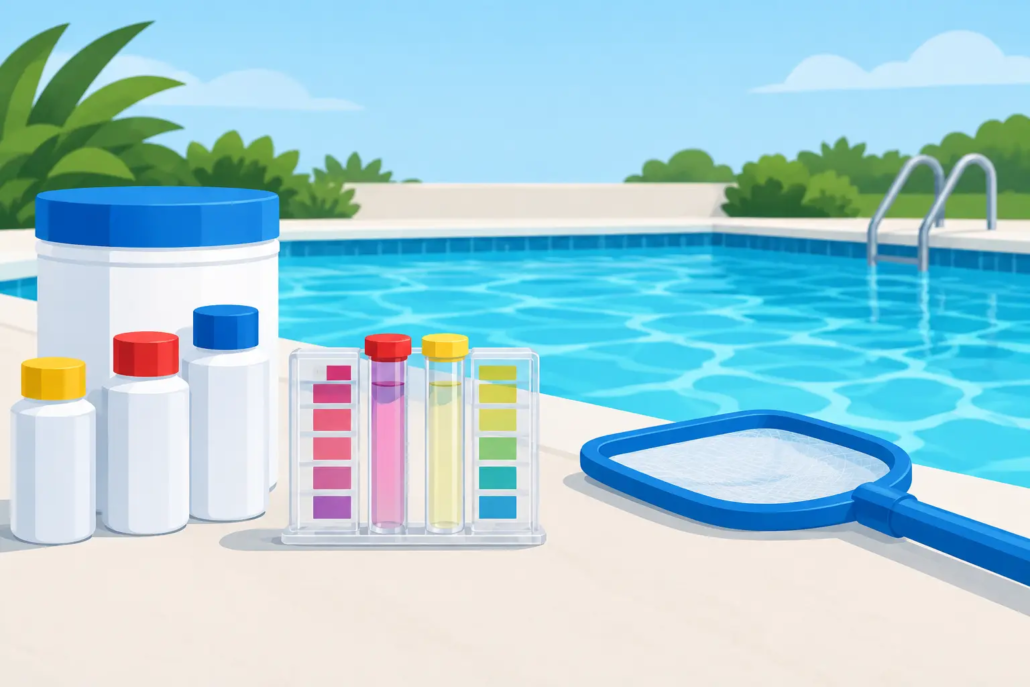
A clear pool can change fast in Central Florida. A heavy afternoon storm, a busy weekend of swimming, or a few extra hours of sun can use up sanitizer and push water balance out of range. That is why homeowners often ask, “how often should pool chemicals be checked?” For most Orlando pools, the answer is at least two to three times per week, with more frequent checks during hot weather, heavy use, or after major rain.
Testing regularly is not about adding chemicals every time. It is about catching changes while they are small, before clear water turns cloudy, algae starts to grow, or pool equipment has to work harder than it should.
How Often Should Pool Chemicals Be Checked in Orlando?
For a residential pool that is being used normally, test chlorine and pH two to three times a week. During summer, after storms, or when the pool is seeing frequent use from family and guests, checking those readings daily is the safer routine.
Other chemistry levels do not usually need daily attention, but they still need consistent monitoring. Total alkalinity, stabilizer, calcium hardness, and salt level for saltwater pools should generally be checked weekly or every other week. A more complete water analysis once a month helps identify trends that basic test strips can miss.
This schedule is more frequent than what a pool owner in a mild, dry climate may need. Orlando pools deal with strong sun, high water temperatures, humidity, rainfall, pollen, landscaping debris, and year-round swimming. Those conditions can affect chemistry quickly. A pool that looked crystal clear on Monday can have low chlorine or early algae growth by Thursday.
The Chemical Readings That Need the Closest Watch
Free chlorine and pH deserve the most frequent testing because they have the biggest day-to-day effect on safe, comfortable water. Chlorine sanitizes the pool and controls algae. Sunlight, swimmers, rainwater, leaves, and other debris all create demand for it.
For many residential pools, free chlorine is commonly maintained around 1 to 3 parts per million. The right target can vary based on your stabilizer level, pool type, and whether you use a salt system, so follow the recommendations for your treatment method. If chlorine is low, do not wait until the next scheduled service day. Low sanitizer gives algae an opening, especially when water is warm.
pH should typically remain between 7.2 and 7.8. When pH climbs too high, chlorine becomes less effective and scale can form on surfaces and equipment. When it is too low, the water can become corrosive and may irritate swimmers’ eyes and skin. A pH reading that keeps drifting is often a sign that alkalinity also needs attention.
A complete weekly or biweekly check should also include these key areas:
- Total alkalinity: Usually maintained between 60 and 120 parts per million to help keep pH stable.
- Calcium hardness: Often kept around 200 to 400 parts per million for plaster and many traditional pool surfaces, though surface type matters.
- Cyanuric acid, or stabilizer: Protects chlorine from the Florida sun, but too much can make chlorine less effective.
- Salt level: Saltwater pools still need chlorine testing, plus a salt reading that matches the generator manufacturer’s recommended range.
A professional water test is especially useful when readings seem to bounce around, the pool needs repeated chemical additions, or you are seeing scale, stains, cloudy water, or a strong chlorine odor.
When to Test More Often Than Usual
A fixed calendar is helpful, but pool chemistry does not always follow a calendar. Certain events call for an extra test and, when needed, a prompt adjustment.
Test after a hard rainstorm. Rain adds untreated water and runoff, diluting chemicals and carrying contaminants into the pool. In Central Florida, a stretch of daily afternoon rain can lower sanitizer and shift pH more than many homeowners expect.
Test after a pool party or a weekend of heavy swimming. Swimmers introduce sunscreen, body oils, cosmetics, and other organic material that chlorine has to work through. If the water is busy, check chlorine and pH before guests arrive and again afterward.
Test when temperatures stay high. Warm water speeds up chlorine use and makes algae more likely to take hold. This is one reason a pool that stays balanced in January may require more attention in July.
You should also test if the water looks different. Cloudiness, a dull color, foam, staining, visible algae, or a slippery pool wall are not issues to ignore until the next weekly visit. They are signs that the water needs a closer look now.
Why Weekly Service Still Matters When You Test at Home
Home testing is valuable, particularly for hands-on owners who want to stay ahead of small changes. But chemical care is more than reading a strip and pouring in chlorine. Proper maintenance accounts for circulation, filter condition, debris, water temperature, bather load, rainfall, and the relationship between each chemical reading.
For example, adding chlorine to a pool with high pH may not deliver the result you expect. Raising stabilizer without testing first can create a longer-term chlorine efficiency problem. Repeatedly treating visible algae without correcting the underlying water balance can lead to the same green-pool cycle all over again.
A dependable weekly service plan combines chemistry checks with brushing, skimming, vacuuming, basket cleaning, equipment observation, and clear documentation. Pro Backyard Pool provides post-service reports with photos, so homeowners and property managers can see what was checked and how their pool was cared for. For owners who prefer to handle cleaning themselves, chemical-only service offers professional water management without giving up the hands-on parts of pool ownership.
Use the Right Testing Method
Test strips are convenient for quick checks and can be useful between professional visits. Store them indoors, keep the container sealed, and avoid using expired strips. Heat and humidity can affect their accuracy, which matters in Florida garages and pool sheds.
A liquid drop test kit generally offers more reliable detail for routine home testing. Digital readers can also be helpful, but they need proper calibration and care. Whatever method you use, take the water sample from elbow depth and away from the skimmer return. Testing water right at the surface or next to a return jet can produce a misleading result.
When a result is out of range, add one product at a time and allow the pool to circulate before retesting. Avoid the temptation to add several chemicals at once. That can make it difficult to know what corrected the problem and can occasionally create unwanted reactions or overshoot the target.
A Simple Routine for Clear, Comfortable Water
For most homeowners, a practical schedule is easy to remember: check chlorine and pH every few days, perform a broader chemistry check each week or two, and test again after rain, heavy use, or a noticeable change in water appearance. If your pool has a history of algae, gets direct sunlight all day, or is used frequently, lean toward more frequent testing.
Commercial and managed-property pools need an even more structured approach. More swimmers mean more sanitizer demand, and pool conditions affect residents, guests, and visitors every day. Consistent records and reliable service help property managers address issues before they become complaints, closures, or costly recovery work.
Your pool should be ready when you are, not another item competing for your weekend. A few timely tests, supported by professional care when needed, keep the water healthy, clear, and inviting for the people who enjoy it most.








Leave a Reply
Want to join the discussion?Feel free to contribute!