

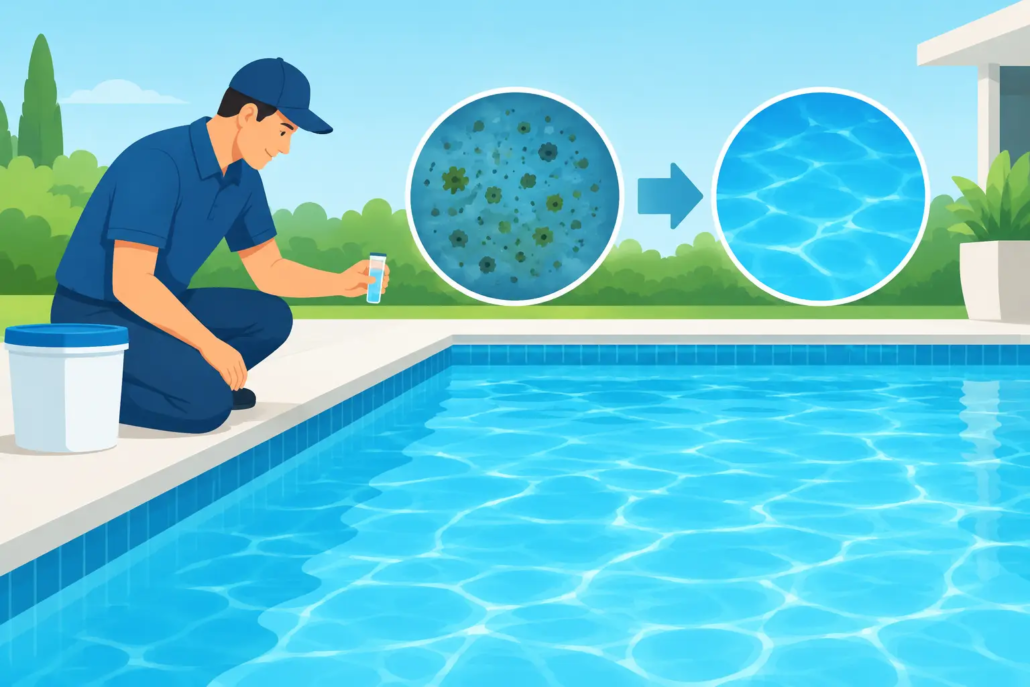
A pool can look blue one morning and begin showing the first signs of algae a few days later, especially after heavy Orlando rain, a busy weekend, or a stretch of intense heat. A pool phosphate treatment service addresses one contributor to that problem: excess phosphates in the water that can feed algae growth. It is not a replacement for proper chlorine, circulation, brushing, and filtration. It is a targeted water-care step that can make those essentials work more effectively.
For homeowners and property managers, the goal is simple: water that stays clear, clean, and ready to enjoy. Knowing when phosphate treatment makes sense helps avoid unnecessary chemical use while preventing small water-quality issues from turning into a green-pool recovery project.
What phosphates do in pool water
Phosphates are compounds containing phosphorus. They enter pool water from many ordinary sources, including lawn fertilizer, leaves and pollen, rainwater, bathers, landscaping runoff, some fill water, and certain pool products. In Central Florida, frequent rain and lush landscaping can create more opportunities for them to reach the pool.
Phosphates do not directly turn a pool green. Algae does that. But phosphates act as a food source that helps algae grow when conditions allow it. If chlorine falls behind, circulation is weak, or debris stays in the pool too long, elevated phosphate levels can make it easier for an algae problem to gain momentum.
That is why phosphate levels should be viewed as part of the complete water picture. A reading alone does not tell the whole story. A clean, properly sanitized pool may have measurable phosphates and still look excellent. On the other hand, a pool with recurring algae, cloudy water, or unusually high chlorine demand may benefit from testing and treatment.
When a pool phosphate treatment service is worth considering
Professional testing is especially useful when a pool has algae that returns after treatment. If the water was cleared, the filter is functioning, and chlorine is being maintained, yet green dust or wall growth keeps coming back, phosphate levels may be contributing to the cycle.
Treatment can also make sense after a major weather event, heavy leaf accumulation, nearby fertilizer application, or a large amount of organic debris in the water. Pools near mature trees, active landscaping, or construction areas often need closer attention because contaminants enter the water more frequently.
For commercial pools, apartment communities, vacation properties, and rental homes, prevention is often the bigger reason to monitor phosphates. A pool that gets regular use has more sunscreen, body oils, debris, and changing water conditions to manage. Consistent chemical service and documented testing help protect the guest or resident experience while reducing the chance of an unexpected closure.
A phosphate treatment is not automatically needed simply because a test detects phosphates. The right decision depends on the level, the pool’s recent history, sanitizer demand, filter condition, and visible water quality. Reliable service means treating the actual condition of the water, not adding chemicals just because they are available.
What professional phosphate treatment involves
A proper pool phosphate treatment service begins with testing. The technician checks phosphate levels alongside the core water balance readings, including sanitizer, pH, alkalinity, and stabilizer. They also look for signs of algae, cloudiness, surface debris, poor circulation, or filter pressure issues that could affect the outcome.
If treatment is appropriate, a phosphate remover is added at a dosage suited to the pool volume and reading. As the product binds with phosphates, the water may temporarily become cloudy. This is a normal possibility, particularly when phosphate levels are high. The filter needs time to capture the particles created during the process.
That filtration step matters. Depending on the pool and the level being treated, the technician may need to clean or backwash the filter afterward. Water chemistry is then checked again and adjusted as needed. Clear communication is valuable here, because pool owners should know what was found, what was treated, and whether the equipment needs additional attention.
At Pro Backyard Pool, post-service reports with photos can give customers a useful record of completed work and the pool’s condition. For hands-on homeowners using chemical-only service, this level of information helps them stay involved without having to guess at the water chemistry. For full-service customers, it provides reassurance that the details are being handled each week.
Phosphate removal is not an algae cure by itself
This is the most common misunderstanding about phosphate treatments. Removing algae food does not kill algae already growing in the pool. Active algae needs a complete response: the correct sanitizer level, brushing, circulation, filtration, debris removal, and sometimes a more focused recovery treatment.
If a pool is green, cloudy, or has visible algae on the walls, treating phosphates without correcting the sanitation issue can lead to disappointing results. The pool may improve briefly, but the underlying algae remains. Likewise, adding phosphate remover to a pool with a clogged filter or poor circulation will not solve the mechanical problem.
Think of phosphate control as prevention and support. It reduces one source of algae fuel so the pool’s normal sanitizer program can do its job more consistently. It works best as part of dependable maintenance, not as a one-time shortcut.
The Central Florida factors that raise algae pressure
Orlando-area pools face conditions that keep algae pressure high for much of the year. Warm water speeds biological activity. Afternoon storms dilute chemicals and wash pollen, soil, and fertilizer residue into the pool. Strong sunlight consumes chlorine, while swimmers and pets add an additional organic load.
Screen enclosures help with larger debris, but they do not stop pollen, fine dust, rainwater, or every leaf from entering. Even a well-maintained backyard pool can experience a sudden shift after a stormy week. That is why weekly testing and visual inspection are more dependable than reacting only after the water changes color.
Pools with salt systems need the same attention. A salt chlorine generator produces chlorine, but it does not eliminate the need for balance testing, brushing, skimming, and filter care. If the system is undersized, dirty, or unable to keep up with bather load and heat, algae can still take hold.
Keeping phosphates and algae pressure under control
The best long-term approach is regular maintenance that removes contaminants before they become a larger issue. Keeping baskets empty, skimming leaves, brushing walls and steps, maintaining proper water chemistry, and cleaning the filter when needed all reduce the burden on the pool.
Homeowners who prefer to handle physical cleaning themselves can benefit from a chemical-only plan that keeps sanitizer and balance on track. Families who want to spend their weekends in the pool instead of working on it may prefer full weekly cleaning and maintenance. Property managers often need a consistent commercial schedule with prompt communication and documented service. The package can differ, but the objective remains the same: healthy water that is always blue, clear, and clean.
It also helps to pay attention around the pool. Avoid letting lawn fertilizer drift into the water, trim overhanging vegetation when practical, and remove leaves before they break down. After a major storm, check the water level, baskets, and clarity. These small habits can reduce the frequency of corrective treatments.
Choosing service based on your pool’s actual needs
A good pool professional should not treat phosphate removal as an automatic add-on. Ask whether the pool has a confirmed elevated reading, what water conditions support treatment, whether the filter can handle the process, and what follow-up is recommended. The answers should be direct and based on your pool, not a generic sales pitch.
For a pool with persistent algae, phosphate treatment may be one helpful part of the solution. For a clear pool with stable chemistry, testing may simply establish a baseline for future service. And for a pool that repeatedly struggles after storms or heavy use, ongoing monitoring can help prevent the frustration and expense of a full green-pool cleanup.
The best time to address phosphate pressure is before a few cloudy patches become a pool nobody wants to use. Consistent care keeps the water inviting, protects your equipment, and lets your backyard return to what it should be: a place to relax.








Leave a Reply
Want to join the discussion?Feel free to contribute!