
A pool can help a rental property stand out in Orlando, but it can also become the fastest way to receive a tenant complaint. Cloudy water, debris on the surface, a loud pump, or a closed pool area affects how residents and guests view the entire property. Consistent rental property pool maintenance protects more than the water. It protects your investment, your reputation, and the experience people expect when they rent a home or live in a managed community.
For landlords and property managers, the goal is not simply checking a pool when something looks wrong. The goal is keeping it blue, clear, clean, and ready to use before a small issue turns into an expensive repair or a green-water recovery.
Why Rental Pools Need a Different Level of Attention
A homeowner may notice a pool problem quickly because they see it every day. At a rental property, that responsibility can be less clear. Tenants may assume the owner is handling the water chemistry, while an owner may expect tenants to report problems before they get worse. In the gap between those expectations, algae can spread, filters can clog, and equipment can run under unnecessary strain.
Central Florida pools face extra pressure from year-round warm temperatures, frequent rain, heavy pollen, leaves, sunscreen, and regular swimmer use. Rainwater can dilute sanitizer and shift water balance. A busy weekend can change chlorine demand overnight. When the pool is vacant between tenants, lack of use does not mean lack of maintenance. A still pool in warm weather can turn green surprisingly fast.
Managed communities and commercial properties have an added responsibility. Residents, guests, and visitors expect the pool to be safe and inviting every day. A closure caused by poor water quality can lead to complaints, lease-renewal concerns, and extra work for the management team.
What Reliable Rental Property Pool Maintenance Includes
The right service plan depends on the pool, the property, and who handles the day-to-day care. A single-family rental with a hands-on owner may only need dependable chemical management. A vacation rental, multifamily property, or community pool often benefits from full weekly service and documented visits.
Water Testing and Chemical Balancing
Clear water is not always healthy water. Proper testing checks sanitizer levels, pH, alkalinity, stabilizer, calcium hardness, and other factors that affect swimmer comfort and equipment life. When these levels drift, chlorine may become less effective, surfaces can scale or stain, and swimmers may experience eye or skin irritation.
Chemical balancing should be based on current conditions, not a one-size-fits-all schedule. Heavy rain, higher bather loads, and hot weather can all change what a pool needs. Regular professional testing helps catch those shifts early, before cloudy water becomes an algae problem.
Cleaning That Supports Water Quality
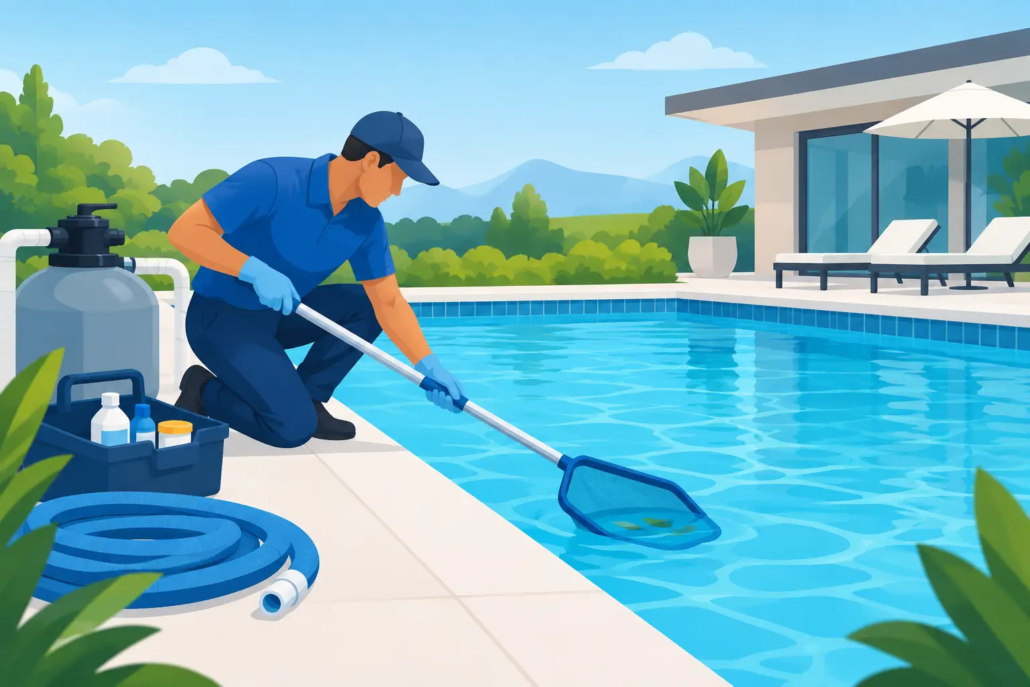
Weekly cleaning typically includes skimming the surface, emptying baskets, brushing walls and steps, vacuuming as needed, and checking the waterline. These are not cosmetic extras. Leaves, dirt, and organic debris consume sanitizer and feed algae. Brushing helps prevent buildup in areas where circulation is weaker, including steps, corners, and behind ladders.
A clean deck and clear pool also give tenants confidence that the property is cared for. That matters during showings, move-ins, inspections, and guest stays.
Equipment Checks Before Failure Happens
Pool pumps, filters, heaters, valves, timers, and automated systems need routine attention. A pump running with low flow, a clogged filter, or a leaking connection can create bigger costs if nobody spots it early. During regular visits, a qualified technician can watch for warning signs such as air in the pump basket, unusual noises, weak returns, water loss, or inconsistent circulation.
Not every equipment concern calls for immediate replacement. Sometimes a cleaning, adjustment, seal repair, or timer correction is enough. The value of ongoing service is knowing the difference before a minor issue damages more expensive components.
Set Clear Responsibilities With Tenants
A rental pool runs better when expectations are written down before move-in. The lease or pool addendum should identify who provides maintenance, what tenants should do between service visits, and how they should report a concern.
Tenants do not need to become pool experts. They should know not to add chemicals unless authorized, leave the pump running as instructed, keep glass away from the pool area, and report cloudy water, leaks, unusual equipment sounds, or a pool that is not circulating. If the property has a safety cover, gate, or alarm, include clear instructions for using and maintaining those features.
For owners who want tenants to perform basic tasks, keep the scope realistic. Emptying a skimmer basket may be reasonable for some long-term rentals. Asking a tenant to diagnose water chemistry or treat algae usually creates more risk than savings. It can also lead to overuse of chemicals, damaged surfaces, and confusion over responsibility.
Choose a Service Level That Matches the Property
There is no single maintenance plan that fits every rental pool. The right choice comes down to occupancy, usage, owner involvement, and the consequences of downtime.
A chemical-only service can work well for a landlord who prefers to handle skimming and basic cleaning but wants professional water testing and chemical adjustments. This option gives hands-on owners support with the part of pool care that is easiest to get wrong.
Full weekly cleaning and maintenance is often the better fit for owners who live out of town, manage several homes, operate short-term rentals, or simply want fewer maintenance calls. It creates a dependable routine for cleaning, balancing, and identifying equipment concerns.
For apartment communities, HOA pools, hotels, and other shared spaces, commercial pool care should reflect higher bather loads and stricter operational needs. Consistency matters because a pool closure affects many people at once. Regular service reports with photos can also make it easier for property managers to confirm that visits were completed and see any issue that needs approval.
Prevent Green Water Instead of Reacting to It
Green water rarely appears without warning. A slight loss of clarity, slippery walls, weak circulation, or low sanitizer can signal that algae is beginning to grow. Waiting to see whether it clears on its own usually allows the problem to spread.
When algae takes hold, recovery may require intensive treatment, brushing, filtration support, and follow-up testing. That can mean a pool is unusable while the issue is corrected. Fast green-pool recovery is valuable when needed, but prevention is easier on the budget and far less frustrating for tenants.
The most effective prevention is a regular schedule that does not disappear during rainy weeks, vacancy periods, or slower rental seasons. Pools need attention whether or not someone is swimming.
Communication Is Part of the Service
Property managers already juggle repairs, vendors, tenant messages, and owner approvals. Pool service should reduce that workload, not add another uncertainty. A reliable provider communicates when service is complete, documents visible issues, and explains whether an item needs immediate action or monitoring.
This is especially useful for owners who do not live nearby. Post-service reports and photos provide a clear record of pool condition without requiring someone to visit the property after every appointment. If a repair is recommended, straightforward communication helps owners make decisions before water quality or equipment performance declines.
At Pro Backyard Pool, certified and insured technicians provide recurring service options for Central Florida homeowners, landlords, and property managers who want a pool that stays ready to enjoy. Whether the property needs chemical management, full weekly care, or help recovering from algae, consistent attention keeps small concerns from taking over the property.
A rental pool should feel like a reason to choose the property, not a source of last-minute calls. Keep the maintenance routine steady, make responsibilities clear, and address changes in the water early. Your tenants get a clean place to relax, and you get a property that is easier to manage with confidence.








Leave a Reply
Want to join the discussion?Feel free to contribute!