

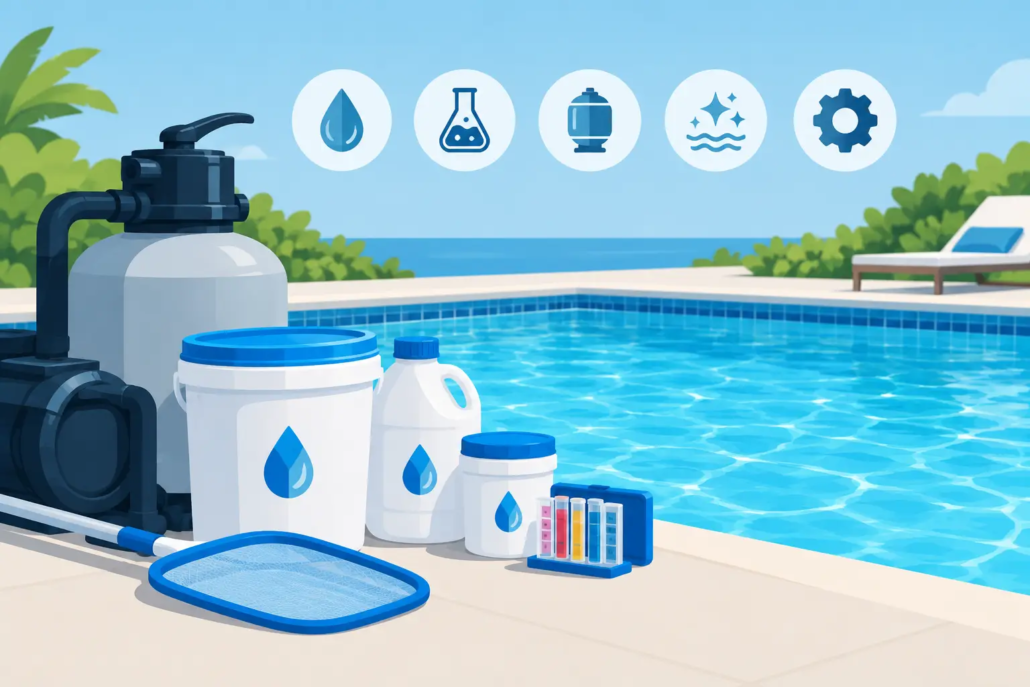
A saltwater pool should feel easy to own, not like another weekend project that comes with test strips, cloudy water, and second-guessing. A professional saltwater pool chemical service keeps the water balanced around the conditions that change it most in Central Florida: intense sun, heavy rain, warm temperatures, pollen, and frequent swimming.
Salt systems are excellent at producing chlorine consistently, but they do not manage every part of pool chemistry on their own. The cell still needs the right salt level, the water needs stable pH and alkalinity, and sanitizer levels need to stay ahead of algae. When those pieces work together, your pool stays blue, clear, and ready for the people who use it.
Saltwater Pools Still Need Chemical Care
The most common misunderstanding about a saltwater pool is that it is chemical-free. It is not. A salt chlorine generator converts dissolved salt into chlorine, which sanitizes the water just as chlorine added by other methods does. The difference is how that chlorine is delivered.
That steady production can make the water feel more comfortable and reduce the need for manually adding chlorine every few days. But Florida weather can change demand quickly. A long stretch of hot weather, a crowded pool party, rainwater, or debris after a storm can use up available chlorine faster than the system replaces it.
A chemical professional checks whether the system is keeping up and corrects the water before a small imbalance becomes visible. That preventive approach matters because algae can take hold quickly in warm Orlando-area pools. Once water turns green, restoring it often requires more time, more treatment, and more attention than routine balancing would have required.
What a Saltwater Pool Chemical Service Includes
Chemical-only service is designed for hands-on pool owners who are happy to empty baskets, skim leaves, and handle basic cleaning but want a dependable professional managing water quality. The exact treatment plan depends on pool size, finish, equipment, swimmer use, and recent weather, but regular service typically focuses on the chemistry that protects swimmers and the pool itself.
Sanitizer and salt system checks
A technician tests the available chlorine level to make sure the pool is properly sanitized. If chlorine is low, the water may need an adjustment or the salt system output may need to be reviewed. If it is too high, the system settings and recent chemical additions may need attention.
Salt concentration also matters. Too little salt can prevent the generator from producing chlorine efficiently. Too much may contribute to corrosion risks or create an avoidable need to dilute the water. The goal is not simply to add salt. It is to keep the level within the manufacturer’s recommended operating range.
pH and total alkalinity balancing
Saltwater pools often trend upward in pH because of the way chlorine is generated. High pH can make chlorine less effective and can lead to scale on tile, heaters, plumbing, and the salt cell. Water may still look clear while this is happening, which is why routine testing is more reliable than judging by appearance alone.
Total alkalinity helps stabilize pH. When alkalinity is too low, pH can swing rapidly. When it is too high, pH may become difficult to bring down. A professional adjusts both measurements with the whole water balance in mind rather than chasing one test result at a time.
Calcium, stabilizer, and other water balance needs
Calcium hardness is particularly important for protecting pool surfaces and equipment. Water with too little calcium may pull minerals from plaster or grout, while excessive calcium can leave scale on surfaces and inside equipment. Salt cells are especially vulnerable to calcium scale, which can reduce chlorine production and shorten cell life.
Cyanuric acid, often called stabilizer, protects chlorine from being quickly destroyed by sunlight. In Florida, some stabilizer is necessary. Too much, however, can slow chlorine’s effectiveness and make it harder to maintain a healthy sanitizer level. Chemical service should account for that balance instead of repeatedly adding products without checking the overall level.
Depending on the pool’s condition, service may also address phosphates, metals, or combined chlorine. These are not automatic add-ons for every visit. Good pool care uses the treatment the water needs, not a one-size-fits-all chemical routine.
Why Orlando Saltwater Pools Need Consistent Attention
Central Florida gives pool owners a long swimming season, but it also creates a high-demand environment for water chemistry. Sunlight burns through chlorine. Afternoon storms dilute water and introduce contaminants. Leaves, pollen, lawn clippings, and runoff add organic material that can feed algae or interfere with water clarity.
A pool that looks fine on Monday can be headed toward trouble by the weekend if sanitizer falls, pH climbs, or circulation is restricted. Saltwater systems help maintain consistency, but they are not a substitute for testing and professional judgment.
This is also where recurring service creates value. Instead of waiting for water to become cloudy, the technician can spot early changes and correct them while the pool is still clear. That helps protect the salt cell, filter, heater, pump, finish, and the time you planned to spend enjoying your backyard.
Chemical-Only Service vs. Full Weekly Pool Care
The right service level depends on what you want to handle yourself. Chemical-only service is a practical choice if you regularly skim the surface, empty baskets, monitor equipment, and brush or vacuum when needed. You receive professional water treatment while staying involved in the physical upkeep of the pool.
Full weekly pool service is better for homeowners who want the pool maintained without managing a task list. In addition to chemical balancing, this typically includes cleaning steps such as skimming, brushing, vacuuming, and checking the pool’s visible condition. It is often the better fit for busy families, landlords, vacation properties, or anyone who wants a consistently clean pool without spending part of every weekend maintaining it.
For managed communities, hotels, rentals, and other commercial properties, regular chemical care also supports a better resident and guest experience. Water quality needs to be dependable, documented, and addressed promptly when conditions change. A commercial pool has greater swimmer load and higher expectations, so consistency is not optional.
Signs Your Saltwater Pool Needs Professional Help
Some issues deserve attention before they become a full green-pool recovery. Cloudiness, a chlorine smell, slippery walls, recurring scale on the salt cell, irritated eyes, or a sudden increase in chemical use can all point to an imbalance.
Other signs are less obvious. If the salt cell shows warning lights, chlorine levels remain low despite normal settings, or pH keeps rising shortly after adjustment, the pool may need more than another bag of salt or a quick dose of acid. Equipment settings, circulation, stabilizer levels, or cell condition may be part of the problem.
A reliable provider should communicate what was found and what was treated. Service reports with photos give homeowners and property managers a clear record of care, especially when they are not present during the visit. That kind of communication turns pool service into something you can trust rather than something you have to monitor from a distance.
Protecting the Investment Behind Clear Water
Saltwater equipment is built to make ownership easier, but it performs best with balanced water. Scale buildup forces a salt cell to work harder. Poor chemistry can damage finishes, stain surfaces, corrode metal components, and make a pool less comfortable to use. Replacing a cell or repairing equipment costs far more than maintaining stable water conditions week after week.
At Pro Backyard Pool, chemical-only and full-service plans are built around that practical goal: healthy water, dependable maintenance, and a pool that stays ready to enjoy. Certified, insured care and clear service updates help take the uncertainty out of maintaining a saltwater pool.
The best time to correct pool chemistry is before anyone sees a problem. With regular professional attention, your saltwater pool can stay clear through summer heat, rainy afternoons, and every backyard gathering that makes owning a pool worthwhile.








Leave a Reply
Want to join the discussion?Feel free to contribute!