

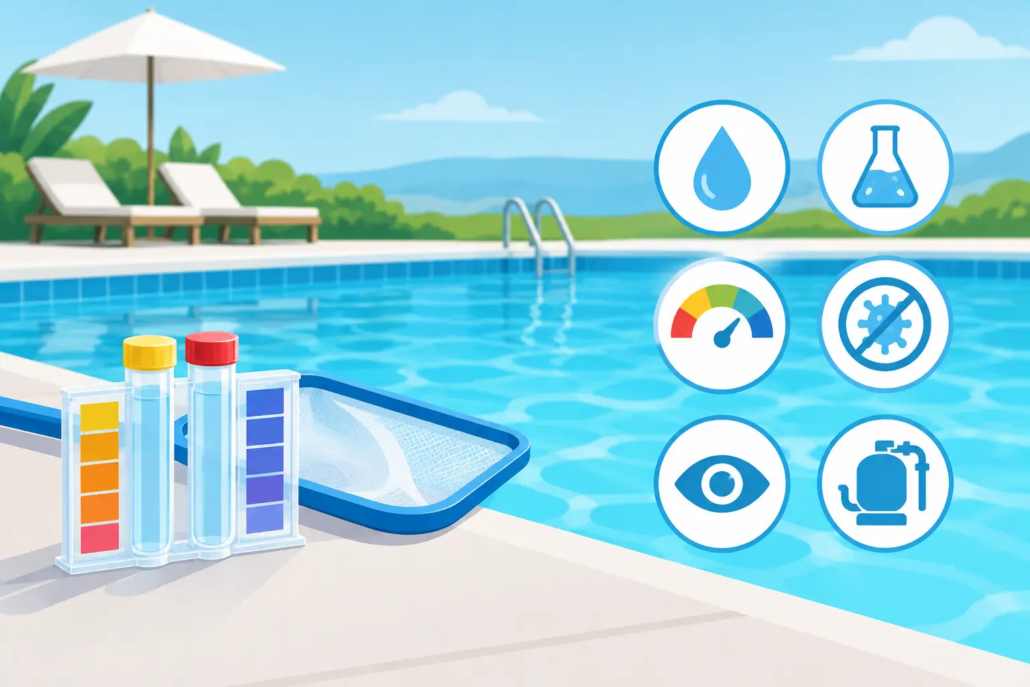
A pool can look bright blue at breakfast and still be a poor choice for an afternoon swim. When you ask, is pool water safe today, the answer comes from more than how clear it looks. Sanitizer levels, water balance, circulation, recent weather, and visible warning signs all matter – especially in Orlando, where heat and afternoon rain can change pool chemistry quickly.
For families, landlords, and property managers, the goal is simple: water that is clear, clean, comfortable, and properly maintained. A quick check before anyone gets in can prevent irritated eyes, damaged equipment, algae growth, and the bigger problem of swimmers being exposed to unhealthy water.
Is Pool Water Safe Today? Start With These Checks
A reliable test kit gives a better answer than a glance at the water. Test strips can be useful for a quick screen, while a quality liquid test kit provides more detail when the readings seem off. Check the water before swimming if the pool has had heavy use, a rainstorm, a chemical adjustment, or any change in appearance.
1. Check the sanitizer level
Chlorine or another approved sanitizer is what controls bacteria, algae, and other contaminants swimmers bring into the pool. For a traditional chlorine pool, free chlorine is commonly kept in the 1 to 4 ppm range, though the right target depends on the pool’s stabilizer level and treatment method.
If free chlorine is too low, clear water can become unsafe surprisingly fast in Central Florida heat. If it is too high, swimmers may experience eye or skin irritation, and it is best to wait until readings return to the normal operating range. Saltwater pools still rely on chlorine, so they need the same attention to testing and balance.
2. Make sure pH is in range
Pool water should usually have a pH between 7.2 and 7.8. Below that range, water can become corrosive and uncomfortable. Above it, chlorine becomes less effective, even when the test result makes it appear that enough chlorine is present.
A pool with a high pH may look fine but struggle to stay sanitary. That is one reason adding chlorine alone does not always solve a water-quality problem. Balanced chemistry helps sanitizer do its job and helps protect the pool surface, plumbing, heater, and equipment.
3. Look beyond the water color
Clear blue water is a good sign, but it is not a complete safety test. You should be able to see the main drain or the bottom of the deep end clearly. Cloudiness can signal poor filtration, suspended debris, early algae activity, or chemistry that needs correction.
Also watch for green walls, yellow dust-like algae, slippery steps, dark spots, foam that lingers, or a strong chemical odor. That sharp “chlorine smell” often does not mean there is too much chlorine. It can mean the sanitizer is reacting to contaminants and needs help through proper treatment and circulation.
4. Consider what happened since the last service
A pool that tested well three days ago may not be ready today. Heavy rain can dilute chemicals and wash debris, pollen, and runoff into the water. A weekend pool party adds sunscreen, body oils, leaves, and a much higher contaminant load than normal.
Florida sun also burns through available chlorine. If your pool receives a lot of direct sunlight, consistent testing and proper stabilizer management matter. Too little stabilizer allows chlorine to disappear quickly. Too much can reduce chlorine’s effectiveness, which is why chemical care should be managed as a complete system rather than a single number.
5. Check circulation and filtration
Healthy water needs movement. Make sure the pump is running as scheduled, returns are pushing water back into the pool, and the skimmer is not packed with leaves. A filter that is dirty, undersized, or overdue for cleaning can leave contaminants circulating instead of being captured.
Poor circulation often shows up first in corners, on steps, and along walls where algae can begin to take hold. If the pool has been sitting still because of a power issue, equipment failure, or a vacation, test the water before swimming. Do not assume it is safe just because it looks unchanged.
6. Do not ignore algae or slimy surfaces
Any visible algae is a reason to pause swimming until the pool is properly treated. Green water is the obvious warning, but early algae can appear as faint discoloration, dusty patches, or a slippery feel on the floor and walls.
Brushing alone will not make algae safe. The pool needs the correct sanitizer treatment, water balancing, filtration, and follow-up testing. In some cases, algae can be cleared quickly. In others, especially when the water has turned dark green or the filter is struggling, the recovery process needs more than a one-time chemical addition.
7. Pay attention to swimmers’ symptoms
If people regularly leave the pool with burning eyes, itchy skin, rashes, coughing, or strong irritation, stop and investigate the water. These symptoms can be related to imbalanced chemistry, chloramine buildup, contaminants, or a separate health concern. They should not be treated as a normal part of owning a pool.
People with open wounds, diarrhea, or contagious illnesses should stay out of the water. Young children also need regular swim breaks and close supervision, even in perfectly balanced water. Chemical safety and swimmer safety work together.
When You Should Wait Before Swimming
There are times when the best answer to “is pool water safe today?” is simply not yet. Wait if you cannot see the bottom clearly, sanitizer or pH readings are outside the recommended range, algae is visible, or the pool has just received a major chemical treatment.
After shocking a pool, follow the product directions and test again before allowing swimmers back in. The timing depends on the chemical used, the amount added, water temperature, sunlight, and circulation. Do not rely on a set number of hours alone.
You should also hold off after a fecal accident, vomit incident, or substantial contamination event. These situations require specific cleanup and disinfection steps, not just skimming debris or adding a little chlorine. Commercial and community pools should have clear response procedures so residents and guests are protected.
The Difference Between Testing and Managing a Pool
Testing tells you what the water is doing at one moment. Managing a pool means responding correctly, checking the equipment, brushing surfaces, emptying baskets, maintaining the filter, and preventing small imbalances from becoming a green-pool problem.
For hands-on homeowners, chemical-only service can provide professional balancing while you handle the physical upkeep. For busy families, rental properties, and managed communities, full weekly service adds the consistency needed to keep the pool ready to enjoy. The right choice depends on how much time you have, how heavily the pool is used, and how comfortable you are reading and correcting water chemistry.
Pro Backyard Pool serves Orlando-area pool owners with dependable maintenance and documented service updates, helping customers see what was checked and what was done. That communication matters because safe water should never be a mystery.
A safe pool should feel easy to enjoy, not like a weekly guessing game. Test when conditions change, act early when readings drift, and give the water time to recover when it needs treatment. Then your backyard pool can stay where it belongs: clear, clean, and ready for the people who enjoy it.








Leave a Reply
Want to join the discussion?Feel free to contribute!