

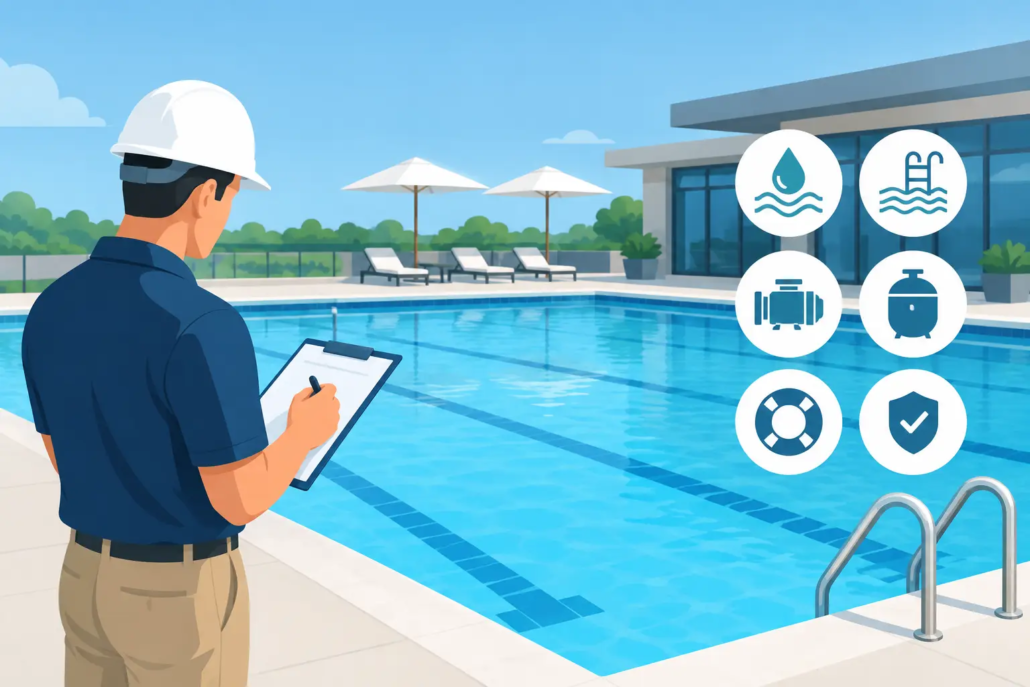
An inspection day should not be the first time a property manager looks closely at the pool gate, test log, or circulation equipment. This commercial pool inspection readiness guide helps Orlando-area communities, hotels, apartments, and managed properties prepare before an inspector arrives – and keep the pool safer for residents and guests every day.
A clean-looking pool can still have problems that lead to a failed inspection. Water chemistry may be out of range, required safety equipment may be missing, or a self-closing gate may no longer latch properly. The good news is that most issues are preventable when pool care, documentation, and safety checks are part of a consistent weekly routine.
Start With Clear, Balanced Water
Inspectors look beyond whether the water appears blue. Water must be properly disinfected, balanced, and circulating. In Central Florida, high heat, heavy rain, frequent swimmer use, and afternoon storms can shift pool chemistry quickly. A pool that tested well yesterday can need attention today.
Before an inspection, test the water using a reliable method and record the results. Pay close attention to disinfectant residual, pH, alkalinity, stabilizer levels where applicable, and water clarity. The exact acceptable ranges and testing requirements can depend on the type of pool and local regulations, so your property should follow the current rules that apply to its facility.
The water should be clear enough to see the main drain from the deck. Cloudiness is not just a cosmetic concern. It can point to weak circulation, filtration trouble, poor chemical balance, or an early algae issue. If visibility is compromised, address the underlying cause rather than simply adding extra chemicals. Overcorrecting can create a new problem with pH, scaling, corrosion, or swimmer comfort.
Check the Pool Equipment Before It Becomes an Inspection Issue
The equipment pad often tells the real story of a pool’s condition. Inspectors may observe pumps, filters, piping, chemical feeders, gauges, and visible leaks. Your team should know what normal operation looks and sounds like, so a change is noticed early.
Confirm that the circulation system is running as scheduled and that water is moving through the skimmers and return lines. Check filter pressure against the system’s normal operating range. A pressure reading that is unusually high can indicate that the filter needs cleaning, while an unexpectedly low reading can point to a circulation or air-leak issue.
Look around the equipment area for dripping water, damaged plumbing, unsecured chemical containers, corrosion, loose electrical connections, or standing water. Keep the area orderly and accessible. Chemical storage deserves special attention: products should be labeled, stored according to their instructions, protected from weather where required, and kept away from incompatible chemicals. Never treat chemical handling as a last-minute cleanup task.
If a piece of equipment is failing, repair it before the inspection when possible. Temporary workarounds can keep a pool operating for a short time, but they may not meet the standard for a commercial facility. When there is a question about a repair or code requirement, a qualified pool professional can help determine the right next step.
Use This Commercial Pool Inspection Readiness Guide for Safety Features
Pool safety features protect people long before an inspector sees them. Walk the pool perimeter from the perspective of a child or an unsupervised guest. Gates, fences, doors, latches, signs, depth markers, and rescue equipment should all be easy to locate and in working condition.
Test every gate and access point. Gates should close and latch as intended, without needing to be pushed or lifted into place. Check that fencing is secure, free of gaps or damage, and not made easier to climb by furniture, planters, stored equipment, or landscaping placed against it.
Make sure required warning signs and depth markers are visible, readable, and not faded or obstructed. Replace cracked, peeling, or missing signage rather than hoping it will be overlooked. Verify that lifesaving equipment is present, accessible, and in good condition. This may include a shepherd’s hook, ring buoy, or other items required for your type of facility.
Also inspect drain covers and visible fittings. Broken, loose, or missing covers are urgent safety concerns. Do not reopen a pool with a suspected drain-cover issue until it has been evaluated and corrected by the appropriate professional.
Keep Logs and Records Current
For busy property teams, documentation is often where readiness breaks down. A pool may receive proper care, but incomplete logs make it harder to show that the work occurred. Consistent records also help identify patterns, such as chemical demand rising after weekends, a filter needing more frequent attention, or a recurring equipment problem.
Review your operating records before an inspection. Water-testing logs should be complete, legible, and current. Include the date, time, readings, and any corrective action taken. If your property has a required maintenance schedule, safety checklist, or incident record, make sure those documents are organized and available.
Post-service reports can make this process easier. A professional commercial pool provider can document completed work, water conditions, and visible concerns with service notes and photos. That does not replace the property’s responsibility to maintain required facility records, but it gives managers a useful paper trail and a clearer picture of what needs attention.
Inspect the Deck, Restrooms, and Guest Areas
The pool environment matters as much as the water. Walk the deck to look for trip hazards, broken furniture, cracked drains, sharp edges, pooled water, and loose coping. Keep deck drains clear so rainwater does not create slippery areas or carry debris back into the pool.
Check that skimmer baskets are emptied, tile lines are clean, and the deck is free of leaves, glass, trash, and maintenance supplies. These small details shape guest confidence and can prevent a simple housekeeping issue from becoming a safety concern.
If your facility includes restrooms, showers, or a pool-adjacent changing area, inspect those spaces as part of the same routine. Verify that they are clean, stocked, functional, and free of standing water. Requirements vary by facility, but a well-maintained surrounding area supports a healthier pool operation overall.
Assign Responsibility Before Inspection Day
Commercial pool readiness works best when one person owns the final check, even if several people share the work. At an apartment community, that might be the property manager or maintenance lead. At a hotel, it may be the facilities manager. The key is avoiding assumptions that someone else tested the water, checked the gate, or updated the log.
Create a simple pre-inspection walk-through for the responsible person to complete. It should cover water clarity and chemistry, equipment operation, safety equipment, signage, fence and gate function, deck conditions, and records. Use it regularly, not only when an inspection is expected. A routine checklist is more reliable than a rushed inspection-morning search for missing supplies.
There is a practical trade-off here. Hands-on property teams can handle daily visual checks and recordkeeping, but commercial pools still benefit from trained maintenance support for chemical management, equipment observations, and recurring service. For properties with heavy use or limited staff, a consistent professional maintenance plan reduces the chance that small issues sit unnoticed between inspections.
Pro Backyard Pool supports Central Florida commercial properties with dependable service, clear communication, and documented maintenance updates. Regular care helps keep water blue, clear, and clean while giving managers more confidence that the pool is ready for residents, guests, and routine inspections.
A successful inspection starts weeks before the inspector arrives. Keep the water healthy, the equipment maintained, the records current, and the safety features working. Then inspection day becomes what it should be: confirmation that your pool is being cared for the right way.








Leave a Reply
Want to join the discussion?Feel free to contribute!