

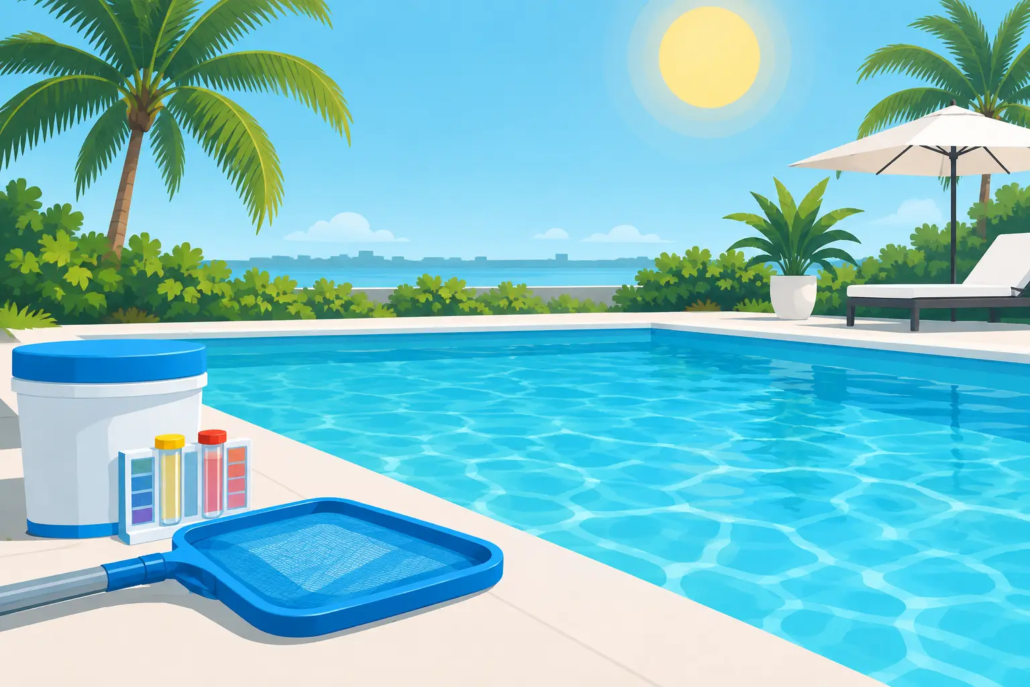
A pool can look clear and still need attention. In Central Florida, intense sun, frequent rain, warm water, and year-round use can change water chemistry quickly. Knowing how to keep pool water safe means looking beyond appearance and maintaining the conditions that protect swimmers, equipment, and the enjoyment of your backyard.
Healthy pool water is not complicated, but it does require consistency. A missed chlorine check after a summer storm or a filter left running too little can give algae and bacteria the opening they need. The good news is that a dependable routine catches small changes before they turn into a green pool, cloudy water, or an unexpected service expense.
How to Keep Pool Water Safe Week After Week
Safe water depends on four things working together: proper sanitizer levels, balanced chemistry, dependable circulation, and regular cleaning. If one slips, the others have to work harder. For example, chlorine cannot perform well in water with an unbalanced pH, and balanced chemicals will not help much if water is not moving through the filter.
For homeowners who enjoy handling their own pool care, a chemical-only service can provide professional oversight while you manage the skimming and basic cleaning. For busy families, landlords, and property managers, weekly full-service maintenance removes the guesswork and helps keep the pool blue, clear, and ready to enjoy.
Test water consistently, not only when it looks off
During Orlando’s warmer months, test pool water at least two or three times per week. Heavy swimmer use, a major rainstorm, nearby lawn work, or a pool party may call for an additional test. Test kits or reliable test strips should check free chlorine, pH, total alkalinity, and stabilizer. Calcium hardness is also worth checking regularly, especially when filling the pool or noticing scale on tile and equipment.
Clear water is encouraging, but it is not proof that sanitizer is at a safe level. Bacteria and other contaminants are not always visible. A proper water test tells you what the pool actually needs instead of inviting unnecessary chemical additions.
Keep a simple log of readings and treatments, particularly if more than one person cares for the pool. Patterns become easier to spot, such as chlorine dropping after afternoon storms or pH rising after periods of heavy use.
Maintain the right sanitizer level
Chlorine is the most common sanitizer for residential pools because it controls bacteria, algae, and organic contaminants. The exact target depends on the pool’s stabilizer level, treatment method, and local conditions, but chlorine should remain within the recommended range for your system at all times. Do not wait for water to turn dull or green before acting.
Florida sunshine burns through unstabilized chlorine quickly. Cyanuric acid, often called stabilizer or conditioner, helps protect chlorine from the sun. Too little stabilizer leaves chlorine vulnerable, while too much can make chlorine less effective. This is one of the reasons adding tablets or shock without testing can create longer-term problems.
Saltwater pools need the same attention. A salt system produces chlorine, but it does not eliminate the need for testing, balancing, brushing, or filter care. If swimmer demand, rain, or heat exceeds what the salt cell can produce, supplemental sanitizer may still be necessary.
Balance pH, alkalinity, and calcium
Pool chemicals work best when the water is balanced. A pH that is too high can reduce chlorine effectiveness and contribute to cloudy water or scale. A pH that is too low may irritate eyes and skin and can be hard on pool surfaces and equipment.
Total alkalinity helps keep pH from swinging too far in either direction. Calcium hardness matters as well, especially for plaster pools. Low calcium can encourage water to draw minerals from surfaces, while high calcium can create scale in the pool and inside equipment. The ideal readings vary by pool finish and treatment system, so use your test results and manufacturer guidance rather than chasing a one-size-fits-all number.
Make adjustments gradually. Adding several chemicals at once makes it difficult to know what changed the water and can lead to overcorrection. Always follow product label directions, add chemicals separately, and never mix products together.
Give the Filter and Pump Time to Work
Circulation is one of the quietest parts of pool safety, but it makes a major difference. Water needs to move through the filter so debris, fine particles, and contaminants can be captured and chemicals can circulate evenly.
Most Central Florida pools need daily pump run time, with the exact schedule depending on pool size, pump speed, bather load, and weather. Variable-speed pumps can often run longer at lower speeds, which may improve circulation while using less energy. A pool professional can help set a schedule that fits your equipment instead of relying on a generic timer setting.
Check the skimmer and pump baskets often, especially after wind or rain. Empty them before debris restricts flow. Clean or backwash the filter according to the filter type and pressure reading. A dirty filter does not just affect appearance – it can limit circulation and make it harder to maintain safe water.
If you notice weak returns, air bubbles in the pump basket, a sudden pressure change, or water that stays cloudy after treatment, address the issue early. Those signs can point to a circulation, filtration, or equipment problem rather than a simple chemical imbalance.
Remove Debris Before It Becomes a Water Problem
Leaves, pollen, grass, sunscreen, oils, and insects all add organic material to the water. That material uses up chlorine and gives algae more opportunity to grow. Skim the surface as needed, vacuum the pool, and brush walls, steps, corners, and around ladders every week.
Brushing matters even when the pool looks clean. Algae can begin in low-flow areas or cling to surfaces before it becomes obvious. Pay extra attention to shaded sections, steps, tile lines, and behind pool features where circulation may be weaker.
After a large gathering, rinse off deck debris, empty baskets, test the water, and consider whether the pool needs an extra sanitizing treatment. A pool used by a few family members has different demands than a pool that hosted 20 guests on a hot Saturday. Safe care should match actual use.
Respond Quickly to Rain, Algae, and Cloudy Water
Florida rain can dilute chemicals and carry debris and contaminants into the pool. Test the water after a heavy storm, remove debris promptly, and make any needed adjustments. If the water is cloudy, do not assume that adding extra chlorine alone will solve it. Check circulation, filter condition, pH, alkalinity, and sanitizer readings first.
Green water or visible algae calls for a more deliberate response. Brushing, vacuuming, correcting water chemistry, and maintaining an effective sanitizer level are all part of recovery. If algae has taken hold, quick professional help can prevent it from becoming a larger cleanup and equipment issue. Pro Backyard Pool provides green-pool recovery for local owners who need clear, healthy water restored without the stress of trial and error.
Avoid swimming when the water is green, very cloudy, strongly chlorinated, or chemically out of balance. Cloudy water can make it difficult to see the bottom of the pool, which is also a safety concern. Wait until visibility and test results are back where they should be.
Store Chemicals Safely and Keep Swimmers Healthy
Pool water safety also extends beyond the waterline. Store chemicals in their original, labeled containers in a cool, dry, well-ventilated area away from children, pets, fuel, and household products. Keep incompatible chemicals apart, and never combine products, even if both are used for pools.
Encourage swimmers to shower before entering the pool and take regular bathroom breaks, especially with young children. Do not allow anyone with diarrhea to use the pool. These straightforward habits reduce the contaminants that your sanitizer has to manage.
Water quality is only one part of a safe pool environment. Active adult supervision, secure barriers, working gates, and clear household rules remain essential, particularly around children. Clean, balanced water supports a safer swim, but it never replaces pool supervision.
A dependable routine is what keeps a pool enjoyable rather than demanding. Test before problems become visible, keep water moving, remove debris, and ask for help when readings or equipment behavior do not make sense. That steady attention lets your family, guests, tenants, or residents spend more time relaxing in a clean pool and less time worrying about what is happening beneath the surface.








Leave a Reply
Want to join the discussion?Feel free to contribute!