

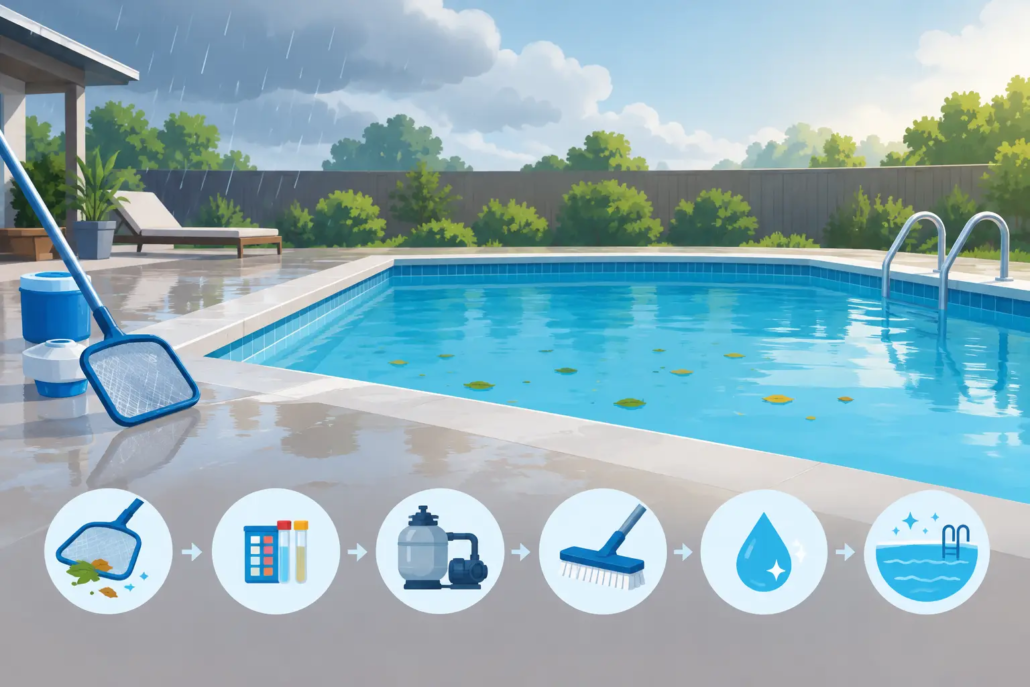
A Central Florida downpour can change a clear pool in one afternoon. Leaves, pollen, mulch, lawn runoff, and gallons of rainwater can all affect circulation and chemistry. A proper pool startup after heavy rain is not about adding a large dose of chlorine and hoping for the best. It is about removing contaminants, checking the equipment, and bringing the water back into balance before cloudiness or algae takes hold.
Pool startup after heavy rain starts with a safety check
Before reaching for a net or test kit, look at the pool area and equipment pad. If standing water has reached electrical connections, the pump motor, heater controls, or automation equipment, do not turn anything on until the area is dry and safe. A tripped breaker, unusual pump noise, or visible damage deserves professional attention.
Check the water level next. Heavy rain may raise the water above the middle of the skimmer opening, which reduces the skimmer’s ability to pull in floating debris. If the water is too high, lower it carefully according to your pool’s drainage setup and local conditions. Do not drain a pool simply because it looks dirty. Draining can create serious structural risks, especially when the surrounding ground is saturated.
1. Remove debris before it sinks
Skim leaves, branches, seed pods, insects, and other floating debris as soon as conditions allow. Empty the skimmer basket and pump basket, then inspect them again later that day. Organic material consumes chlorine as it breaks down, and debris that settles on the floor can leave stains or feed algae.
Use a brush on the walls, steps, tile line, and corners, even if the water still appears mostly clear. Rain and runoff can leave behind a thin film that algae uses as a starting point. Brushing also moves fine debris into circulation so the filter can capture it.
If the pool is covered in a heavy layer of leaves or sediment, vacuuming to waste may be the better choice when your system allows it. That prevents excess debris from being sent straight into the filter. The trade-off is water loss, so watch the water level and avoid this approach when the pool is already low.
2. Restore normal circulation
Once the baskets are clean and the water level is appropriate, run the circulation system. After a major storm, many pools benefit from extended pump time to help the filter remove fine particles and distribute sanitizer. The right runtime depends on pool size, pump type, water condition, and filter capacity, but a brief normal cycle may not be enough after a heavy rain event.
Watch the returns. They should create visible movement across the surface, not just push water in one direction. If circulation looks weak, the filter may need attention or a basket may still be blocked.
For sand and DE filters, check the pressure gauge against the system’s normal clean reading. Backwash only when pressure has risen enough to indicate restricted flow. Backwashing too often can reduce filtration efficiency, while waiting too long can strain the pump and leave the water dull. Cartridge filters should be inspected and cleaned when flow is reduced or the cartridges are visibly loaded with debris.
3. Test the water before making chemical changes
Rainwater dilutes the chemicals already in the pool. It can lower sanitizer, alkalinity, calcium hardness, and stabilizer levels. More importantly, storm runoff can introduce phosphates, fine dirt, organic waste, and contaminants that are not obvious from the water’s color.
Use a reliable test kit or professional water test to check free chlorine, pH, total alkalinity, cyanuric acid, calcium hardness, and phosphates when appropriate. For saltwater pools, verify the salt level as well. A salt system may continue producing chlorine, but it cannot quickly compensate for a sudden drop in sanitizer after a storm.
Do not rely on a single test strip result if the water has turned cloudy, green, or has a strong chlorine odor. That odor often indicates combined chlorine, meaning the sanitizer is working hard but may not be keeping up with contaminants.
4. Balance in the right order
Start by correcting total alkalinity and pH, then address sanitizer. Balanced alkalinity helps keep pH stable, while proper pH allows chlorine to work effectively. Adding several products at once makes it difficult to know what changed and can create avoidable chemistry problems.
After balance is restored, raise free chlorine to the appropriate level for your pool’s stabilizer reading. If the water is cloudy, has visible algae, or has been overwhelmed by organic debris, a chlorine treatment may be needed. The correct amount depends on the actual test results, pool volume, and severity of contamination. Guessing at a heavy treatment can waste chemicals, damage surfaces, or leave swimmers uncomfortable.
Keep swimmers out of the pool until the water is clear, balanced, and at safe sanitizer levels. Clear water is not automatically healthy water. A pool can look blue while still carrying low sanitizer or poor filtration conditions.
5. Give the filter time to clear the water
After the water has been brushed, balanced, and treated, the filter needs time to do its job. Fine storm debris can take a day or longer to clear, particularly after runoff enters the pool. Continue checking baskets and filter pressure during this period.
Avoid the temptation to add a clarifier, algaecide, phosphate remover, shock, and multiple balancing chemicals all at once. Some pools need only filtration and corrected chlorine. Others need a more focused algae recovery process. The right response depends on what testing shows and how quickly the water changes.
If the water is still hazy after circulation and proper chemistry, inspect the filter condition and confirm that the pump is running long enough. A clean-looking pool with poor circulation can turn green quickly in Orlando heat.
6. Watch for early algae warning signs
Green tinting, slippery walls, yellow dust-like buildup, cloudy water, and recurring low chlorine are signs that rainwater may have pushed the pool toward an algae problem. Address these signs early. Waiting until the water is fully green usually means more chemical use, more brushing, and more downtime.
Algae is especially common after several wet days, when debris continues entering the pool and sunlight returns between storms. Regular service helps prevent this cycle by keeping sanitizer, circulation, and filtration on track even when weather interrupts a homeowner’s normal routine.
Pro Backyard Pool can provide chemical-only support for hands-on pool owners or full weekly cleaning for families and property managers who want the pool checked, cleaned, and documented consistently. For a pool that has already turned green, fast action is far more effective than letting the problem build.
7. Prevent the next storm from creating the same problem
Look beyond the water once the pool is clear. Trim plants that regularly drop debris into the pool, keep mulch and loose soil away from the deck edge, and make sure nearby drains direct runoff away from the pool whenever possible. Check that the skimmer weir moves freely and that the equipment area stays protected from pooling water.
For managed properties, establish a post-storm inspection routine. Shared pools can collect a high volume of debris quickly, and cloudy water creates a poor experience for residents and guests. Reliable inspections also help catch equipment issues before they turn into service interruptions.
A storm does not have to steal the weekend from your backyard. With prompt cleanup, accurate testing, and steady filtration, most pools can return to the clear, clean conditions your family or guests expect. If the water is changing faster than you can correct it, getting experienced help early can keep a small weather-related setback from becoming a full green-pool recovery.








Leave a Reply
Want to join the discussion?Feel free to contribute!