

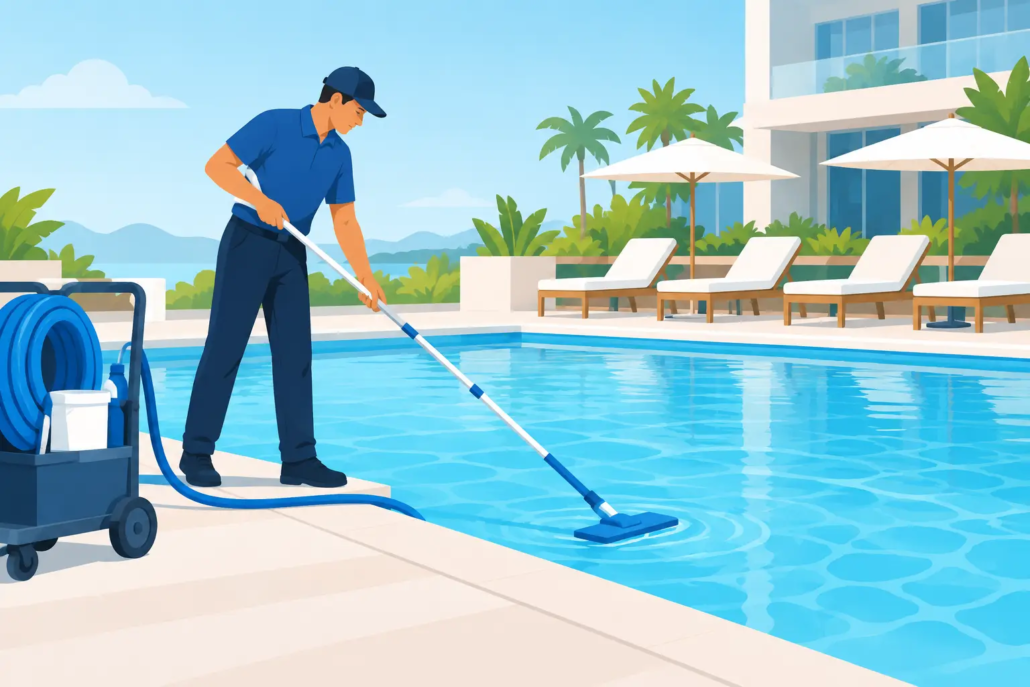
A commercial pool can look fine at 8 a.m. and become a guest complaint by midafternoon. In Central Florida, heat, rain, heavy swimmer use, sunscreen, and falling debris can change water conditions quickly. Commercial pool cleaning is not simply about skimming leaves before someone notices. It is ongoing care that protects swimmer health, keeps the pool inviting, and helps property teams avoid preventable disruptions.
For apartment communities, hotels, HOAs, fitness centers, and rental properties, the standard is higher than it is for a lightly used backyard pool. Residents and guests expect water that is blue, clear, and clean every time they walk through the gate. Property managers also need dependable communication, documented service, and a professional who can catch small issues before they become green water, damaged equipment, or a pool closure.
Why commercial pools need a different level of care
A commercial pool has more variables to manage. More swimmers introduce more contaminants, including body oils, lotions, makeup, and organic material. Those contaminants consume sanitizer and can affect water clarity faster than many property owners expect. A busy Saturday at a community pool may create a chemical demand that is very different from a quiet weekday morning.
Florida weather adds another layer. Afternoon storms can dilute chemicals and introduce debris. Long stretches of heat accelerate algae growth when sanitizer or circulation falls behind. Pollen, leaves, and landscaping debris can quickly fill baskets and reduce circulation. The result is a pool that may need attention between scheduled visits, especially at high-use properties.
There is also a public-facing concern. A cloudy pool, visible algae, or debris along the tile line changes how residents and guests view the entire property. Clean pool water supports a well-maintained community image. Poor water quality creates questions about safety, management, and whether concerns will be handled promptly.
What reliable commercial pool cleaning should include
The right scope depends on the pool’s size, bather load, equipment, and site requirements. Still, reliable recurring service should go beyond a quick visual check. A technician should assess the water, pool surfaces, circulation system, and visible equipment during each visit.
Accurate water testing and chemical management
Healthy water starts with testing, not guesswork. Sanitizer, pH, alkalinity, stabilizer, calcium hardness, and other readings work together. When one level moves out of range, it can affect how well chlorine performs, how comfortable the water feels, and whether scale or corrosion develops over time.
Chemical management is a balancing act. Adding more chlorine is not always the answer to a water-quality problem. High pH, weak circulation, an overloaded filter, or early algae growth can all contribute to dull or cloudy water. A trained pool professional looks at the full condition of the pool and makes measured adjustments that support safe, clear water.
For some managed properties, a chemical-focused plan may be appropriate if onsite staff handles routine skimming and cleaning. For most busy commercial pools, however, full weekly service offers more dependable oversight because the same visit includes cleaning, testing, equipment checks, and service documentation.
Surface cleaning that protects appearance and circulation
Skimming, vacuuming, brushing, and emptying baskets are not cosmetic extras. Debris breaks down in the water and adds to the chemical demand. Algae often begins in areas with less circulation, including steps, corners, behind ladders, and along walls. Brushing these surfaces helps prevent buildup before it turns into a visible issue.
A professional visit should also include attention to the tile line and deck-side debris where appropriate. A clean pool perimeter helps the water look cared for and reduces the amount of material that is carried into the pool by wind, rain, and swimmers.
Filter, pump, and equipment checks
Clear water depends on circulation and filtration. If a pump is not moving water properly, a filter is dirty, or a basket is clogged, chemicals cannot do their job effectively. A pool can receive the correct treatment and still struggle with clarity when the equipment is underperforming.
Routine equipment checks help identify warning signs early: unusual pump noise, weak return flow, leaks, pressure changes, damaged valves, or a heater issue. Not every problem can be repaired during a maintenance visit, but reporting it quickly gives a property manager time to make a decision before a minor concern becomes a larger expense.
Clear service reports for property teams
Commercial clients should not have to wonder whether the pool was serviced. Post-service reports with photos create a useful record of work completed, water conditions, and concerns that need follow-up. They are especially valuable for managers who oversee multiple properties or are not onsite every day.
Good communication also makes it easier to respond to resident questions. Instead of relying on a verbal update, the management team has documentation showing that the pool was checked, treated, and cleaned. That level of visibility supports faster decisions and fewer surprises.
The cost of waiting for a visible problem
Many pool problems begin quietly. A slightly low sanitizer reading, a missed basket cleaning, or early algae growth may not be obvious to residents right away. By the time the water turns green or cloudy, the pool may require more chemicals, more labor, and possible closure while it is restored.
Green-pool recovery is sometimes necessary, particularly after a storm, equipment failure, or service gap. It can restore an algae-affected pool quickly when handled correctly. But recovery should be the exception, not the maintenance plan. Consistent commercial pool cleaning is usually the more predictable and cost-conscious approach because it focuses on prevention.
Waiting can also shorten equipment life. Unbalanced water may contribute to scaling, corrosion, surface staining, and unnecessary wear on pumps, filters, heaters, and salt systems. Regular maintenance does not eliminate every repair, but it gives owners a better chance to address conditions before damage spreads.
How often should a commercial pool be serviced?
There is no single schedule that fits every commercial property. A small HOA pool with limited weekday use may have different needs than an apartment pool that sees dozens of swimmers daily. A hotel or short-term rental property may need more frequent attention during peak travel periods, while a fitness facility may need additional checks because of consistent daily traffic.
Weekly full-service maintenance is a strong starting point for many Orlando-area properties, but higher-use pools may benefit from multiple visits or supplemental onsite checks. The key is matching service frequency to real conditions, not choosing the lightest plan and hoping the water stays stable.
When evaluating frequency, consider swimmer volume, pool size, nearby trees and landscaping, rainfall exposure, equipment age, and whether trained onsite staff is available. A reliable provider should be able to explain why a recommended plan fits the property rather than offering the same service to every client.
What property managers should expect from a pool partner
Commercial pool care works best when the service provider and property team communicate clearly. Managers should expect a licensed, insured, and experienced company that arrives consistently, handles water professionally, and documents what was done. They should also expect direct notice when equipment, water conditions, or safety-related concerns need attention.
Responsiveness matters just as much as the routine visit. When a resident reports cloudy water or a manager sees an issue before an event, a delayed response can turn a manageable concern into a closed amenity. Choosing a local company with clear communication can reduce that stress.
It is also worth asking how the company handles unexpected algae outbreaks and whether its technicians use current testing and treatment methods. The lowest monthly price may leave out important parts of care, such as equipment inspection, detailed reporting, or the time needed to properly balance challenging water. Compare what is included, how often the pool is visited, and how issues are communicated.
A cleaner pool supports a better property experience
A pool is often one of the most visible amenities on a property. It is where families spend weekends, residents meet neighbors, and guests decide whether a community feels well cared for. That experience depends on more than a sparkling surface. It depends on healthy water, working equipment, and a maintenance schedule that keeps problems from gaining momentum.
Pro Backyard Pool provides commercial service with the consistent care, photo updates, and local responsiveness Central Florida property teams need. The goal is simple: keep the pool ready for the people who rely on it, so managers can spend less time chasing water problems and more time running their property with confidence.








Leave a Reply
Want to join the discussion?Feel free to contribute!