

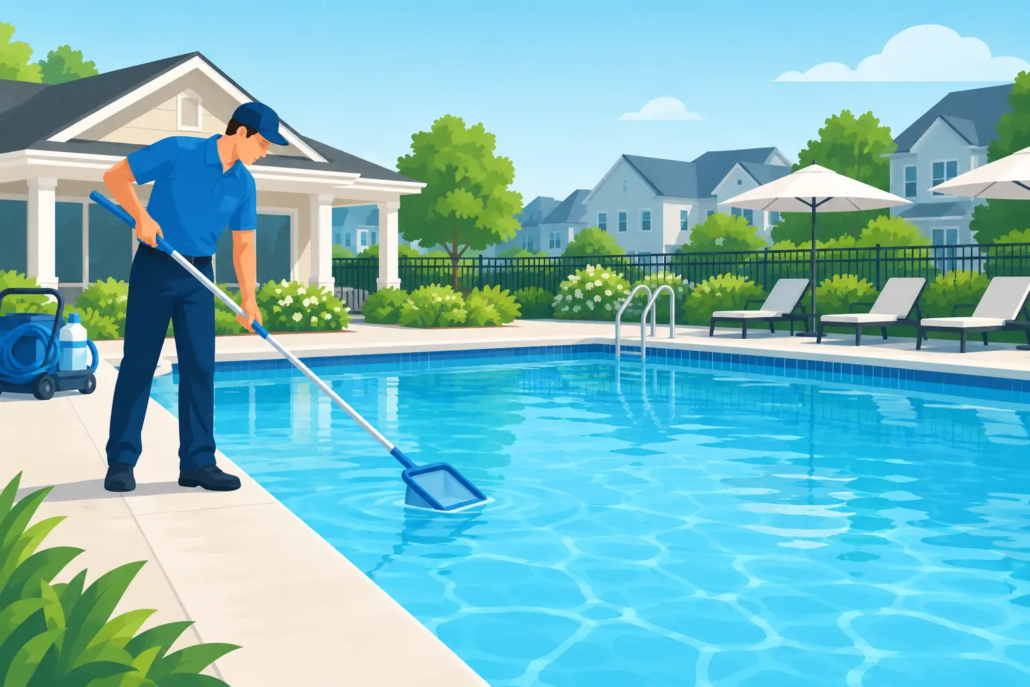
A community pool can look fine at 9 a.m. and become a resident complaint by dinner. Central Florida heat, afternoon storms, sunscreen, heavy bather loads, and falling debris can change water conditions quickly. Reliable hoa community pool cleaning protects more than the appearance of the pool. It helps the board provide a clean, healthy amenity that residents can enjoy with confidence.
For HOA boards and property managers, pool care is not a once-a-week chore checked off a list. It is an ongoing responsibility that affects resident satisfaction, safety, operating costs, and the reputation of the entire community.
What HOA Community Pool Cleaning Should Cover
A well-maintained community pool needs more attention than a typical backyard pool. Dozens of swimmers can introduce oils, lotions, sunscreen, dirt, and organic contaminants in a single afternoon. When conditions are not monitored and corrected consistently, clear water can turn cloudy, algae can take hold, and equipment may have to work harder than it should.
Professional community pool service begins with water testing and chemical balancing. Chlorine or sanitizer levels, pH, alkalinity, calcium hardness, stabilizer, and other factors need to stay within appropriate ranges. The goal is balanced water that is comfortable for swimmers, supports effective sanitation, and protects pool surfaces and equipment.
Full-service maintenance also includes skimming the surface, emptying baskets, vacuuming or brushing as needed, inspecting circulation, checking filters, and removing visible debris. Tile lines, steps, ladders, handrails, drains, and deck-adjacent areas deserve attention as well. Residents notice these details, especially in a shared space where cleanliness reflects on the whole community.
The exact scope and frequency depend on the size of the pool, how many residents use it, whether there is a spa, and the surrounding landscape. A quiet neighborhood pool may need a different service schedule than a busy apartment-style community or a property with frequent guest traffic. What should not change is the consistency of care.
Why Weekly Service Alone May Not Be Enough
Weekly full-service visits are the foundation for many HOA pools, but some properties benefit from more frequent checks. Orlando weather is one reason. A heavy rain can dilute chemicals and introduce debris. Several hot, sunny days can increase sanitizer demand. A weekend pool party can leave the water needing prompt adjustment before Monday morning.
This does not mean every community needs daily on-site cleaning. It means the service plan should reflect real pool use and seasonal conditions instead of relying on a one-size-fits-all schedule. A good provider evaluates the property, monitors patterns, and recommends a practical approach that keeps the water clear without adding unnecessary service.
Chemical-only service can work for a managed property with an on-site team capable of handling skimming, debris removal, and basic cleaning. However, boards should be honest about whether that work is being completed consistently. If leaves sit in the pool, baskets overflow, or the tile line is ignored, chemical balancing alone will not create the clean experience residents expect.
For most shared pools, a comprehensive maintenance plan offers greater peace of mind. It puts water care, cleaning, equipment checks, and routine communication under one accountable service partner.
The Cost of Waiting for a Pool Problem
Cloudy water, green walls, strong chemical odors, and repeated resident complaints are usually symptoms, not the original problem. Poor circulation, an imbalanced pH level, insufficient sanitation, a dirty filter, or missed debris removal may have been building for days or weeks.
Waiting until the water turns green is costly because algae recovery takes more than a quick dose of chemicals. The pool may need intensive treatment, brushing, filtration support, and follow-up testing before it is ready for swimmers again. Depending on the condition, the community could also face a temporary closure at the exact time residents want to use the pool most.
Preventive service is generally more predictable and more budget-friendly than emergency recovery. It also helps identify small equipment concerns before they become disruptive repairs. A pump making an unusual sound, a weak return line, or recurring debris in a basket can be an early warning that deserves attention.
Clear Communication Matters to HOA Boards
Property managers and volunteer board members need more than a promise that the pool was serviced. They need visibility into what was done, what was found, and whether action is needed. This is especially useful when residents raise questions about water clarity, closures, or an issue they noticed near the equipment pad.
Post-service reports with photos provide that visibility. They create a record of completed work and make it easier for managers to communicate with boards, maintenance teams, and residents when necessary. If a technician notices a developing equipment concern or a condition that could affect the pool, a documented update supports faster decisions.
Responsiveness matters just as much. A community pool is a shared amenity, so concerns can quickly become a management issue. A dependable pool company should be reachable, clear about next steps, and prepared to address problems before they grow into a longer closure or a larger expense.
Choosing a Community Pool Cleaning Partner
The lowest monthly quote is not always the lowest long-term cost. When comparing providers, HOA boards should look beyond the visit frequency and ask how the company handles water testing, cleaning standards, equipment observations, service documentation, and urgent water-quality concerns.
Certification and insurance are also essential for commercial and managed properties. They show that the provider takes professional responsibility seriously and understands the level of care a shared amenity requires. Experienced technicians should know how to spot early signs of algae, circulation issues, chemical imbalance, and surface problems before residents encounter them.
It also helps to ask how the company adapts during high-use periods. A pool that performs well in January may need a different level of attention in July. The right partner will explain the recommended service plan in straightforward terms, including where added visits or treatment may be worthwhile and where they may not be necessary.
Pro Backyard Pool provides commercial pool care for Central Florida communities with a focus on healthy water, reliable maintenance, service reporting, and responsive communication. That approach gives property managers a clearer picture of pool conditions while helping residents enjoy water that is blue, clear, and clean.
Keeping the Pool Area Ready for Residents
Water quality is the center of community pool care, but the resident experience extends beyond the waterline. Clean decks, orderly furniture areas, working gates, visible rules, and properly maintained safety features all contribute to a pool area that feels cared for.
Pool professionals may not manage every aspect of the amenity, but regular service visits can help identify visible concerns that should reach the property manager. A loose handrail, damaged skimmer lid, standing water near the deck, or a gate that does not close properly should not wait for a resident to report it after an accident or inconvenience.
Boards can also support better pool conditions by setting clear guest rules, encouraging showering before swimming, and responding quickly when residents report a problem. Shared responsibility does not replace professional maintenance, but it helps protect the work being done between service visits.
A community pool should feel like a benefit residents are proud to have, not a source of recurring emails and avoidable repairs. With consistent cleaning, balanced water, documented service, and prompt attention when conditions change, the pool can stay ready for the people who call the community home.








Leave a Reply
Want to join the discussion?Feel free to contribute!