

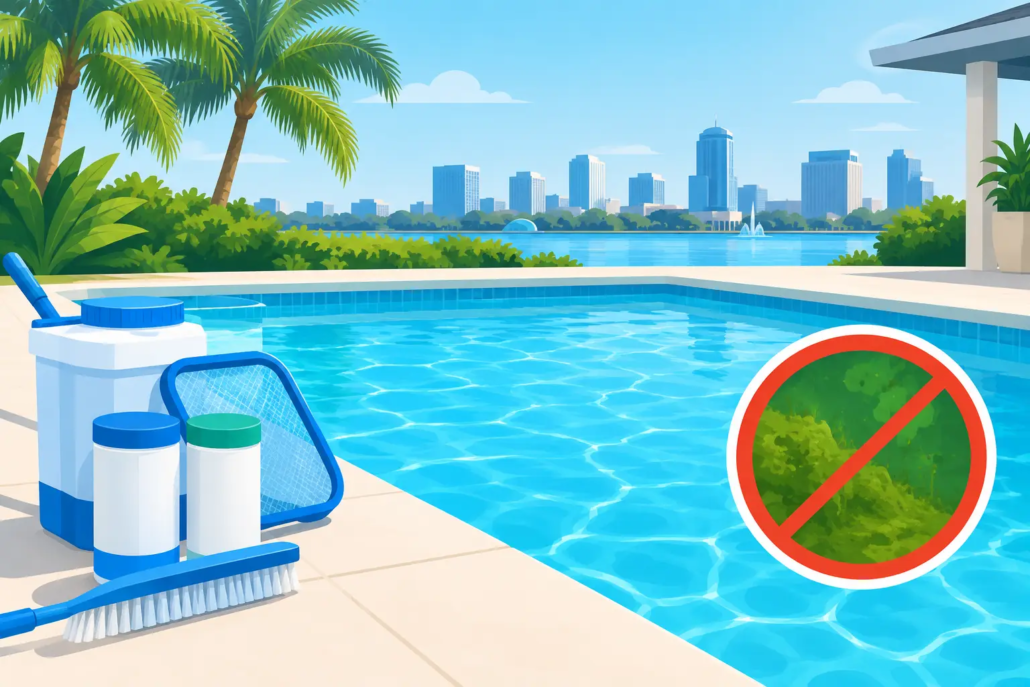
A pool can look perfectly clear on Monday and show green dust along the steps by Friday. In Central Florida, heat, afternoon rain, heavy swimmer use, and falling debris create ideal conditions for algae to take hold. Knowing how to prevent pool algae is less about one big chemical treatment and more about keeping a few essential parts of pool care consistent, especially when the weather changes quickly.
Algae is not just a cosmetic problem. Once it spreads, it can make surfaces slippery, cloud the water, increase chemical demand, and put extra strain on your filter. A dependable maintenance routine protects the clean, comfortable pool your family, guests, residents, or tenants expect.
How to Prevent Pool Algae Before It Starts
Algae needs water, sunlight, and nutrients to grow. You cannot remove sunlight from an Orlando backyard, but you can make the water a much less welcoming place for algae. The goal is steady sanitation, balanced chemistry, good circulation, and regular removal of debris before it breaks down in the pool.
The most common mistake is waiting until the water turns green. By then, algae has already multiplied and may be attached to walls, steps, ladders, and rough areas of the finish. Prevention costs less time, less chemical, and less frustration than a full green-pool cleanup.
Keep a Consistent Sanitizer Level
Chlorine is your primary defense against algae, but it only works when there is enough available chlorine in the water. Florida sun can burn off chlorine quickly, while rain, sunscreen, leaves, pollen, and swimmers all raise the amount of sanitizer your pool needs.
Test the water regularly and maintain the chlorine level recommended for your pool type and stabilizer level. For many residential pools, that means checking at least two to three times per week during warm weather, with more frequent checks after a major storm, a pool party, or an unusually hot stretch.
Do not rely on a chlorine tablet floating in the pool as proof that your water is protected. Tablets dissolve at different rates, and a feeder can run empty without being noticed. Test results, not appearances, tell you whether the sanitizer is doing its job.
If you use a saltwater system, remember that it still produces chlorine. Inspect the salt cell, confirm the output setting is appropriate for the season, and test chlorine routinely. A salt pool can grow algae just as quickly as any other pool when chlorine falls behind demand.
Balance the Water, Not Just the Chlorine
Sanitizer works best in properly balanced water. High pH can make chlorine less effective, while poorly managed stabilizer can either leave chlorine vulnerable to sunlight or make it harder for chlorine to perform. Total alkalinity, calcium hardness, and pH also affect swimmer comfort, surface protection, and equipment life.
For most pools, a pH range around 7.2 to 7.8 supports effective sanitation and comfortable water. The exact target can vary by pool surface, equipment, and treatment method, so use a reliable test kit or professional water analysis rather than adding chemicals based on guesswork.
It is also wise to watch cyanuric acid, often called stabilizer. A reasonable amount helps protect chlorine from the Florida sun. Too much, however, can reduce chlorine’s active strength and create the frustrating situation where a pool tests as chlorinated but still develops algae. This is one reason weekly testing matters.
Run the Pump Long Enough for Your Pool
Still water is algae-friendly water. Proper circulation distributes sanitizer, moves debris toward the skimmer, and gives the filter time to capture fine contaminants. In Orlando’s warm season, many pools need longer pump run times than owners expect.
A common starting point is eight to 12 hours per day, but the right schedule depends on pool size, pump speed, bather load, water temperature, and the condition of the equipment. Variable-speed pumps can often run longer at a lower speed, which improves circulation while managing energy use. A pool professional can help set a schedule that fits your system instead of using a one-size-fits-all timer setting.
Check that return jets are aimed to create gentle circulation around the pool, not simply pointed at the surface. Dead spots behind ladders, on steps, and in corners are frequent places for algae to begin. If one area repeatedly turns green first, circulation may be part of the problem.
Maintain the Filter and Skimmer
Your filter does not kill algae, but it removes the particles and debris that contribute to water problems. Clean skimmer baskets and pump baskets regularly, particularly after windy days or storms. A packed basket restricts flow and reduces the circulation your pool needs.
Follow the manufacturer guidance for cleaning or backwashing your filter. Cleaning too rarely limits performance, while cleaning some filter types too aggressively or too often can also reduce their ability to trap fine particles. Watch the pressure gauge and learn your system’s normal operating range.
If the water stays dull, circulation is weak, or the filter pressure behaves strangely, do not ignore it. A small equipment issue can turn a simple maintenance visit into a larger algae recovery job.
Brush and Remove Debris Every Week
Chemical balance alone will not always prevent algae from clinging to pool surfaces. Brushing disrupts early growth before it becomes visible and helps sanitizer reach small areas where algae can settle. Brush walls, steps, benches, corners, tile lines, ladders, and around return fittings at least once each week.
A pool with a screened enclosure may collect less large debris, but it still gets pollen, dust, insects, and fine organic material. Skim leaves and debris from the surface before they sink. Vacuum as needed so dirt does not become a food source in low-flow areas.
Pay close attention after a storm. Central Florida rain can dilute water chemistry, wash contaminants into the pool, and fill baskets quickly. A quick post-storm check of chlorine, pH, water level, baskets, and visible debris can stop a small change from becoming green water.
Avoid the Habits That Feed Algae
Several routine shortcuts create conditions algae loves. Letting the pump run only a few hours, skipping brushing for weeks, waiting to empty baskets, and adding chemicals without testing all leave gaps in your defense.
Heavy use also changes the plan. After a weekend gathering, more sunscreen, body oils, grass, and organic material enter the water. Test the pool, remove debris, and be ready to adjust sanitizer afterward. The same applies when landscaping work, construction dust, or yard runoff reaches the pool.
Algaecide can be useful in some maintenance programs, but it should not replace proper sanitizer and circulation. Used as directed, it may provide an added layer of prevention. Used as a shortcut for poor chemistry, it will not solve the underlying issue and may add unnecessary cost.
When to Act on Early Warning Signs
Do not wait for a fully green pool. Faint green dust on steps, a slippery wall, cloudy water, unusual chlorine demand, or a yellowish film in shaded areas can all signal early algae activity. Brush the affected surfaces, test and correct the water, confirm the pump and filter are operating properly, and respond promptly.
The right response depends on what the test results show and how far the algae has spread. A light early issue may clear with brushing and corrected sanitation. A pool that is green, cloudy, or repeatedly losing chlorine may need a more structured treatment and filter cleanup. Treating the water without addressing circulation, debris, or balance is why algae so often returns.
For homeowners who enjoy handling the physical upkeep but want confidence in their water chemistry, chemical-only service can keep testing and adjustments on schedule. Full weekly service adds brushing, skimming, vacuuming, equipment checks, and clear service documentation. For apartment communities, rentals, and other managed properties, consistent professional care helps protect both water quality and resident expectations.
Pro Backyard Pool helps Central Florida pool owners stay ahead of algae with dependable maintenance built around healthy, clear water. The best plan is the one that gets completed every week, even when life is busy and the forecast is not.
A clean pool should feel ready when the sun comes out, not like another weekend project. Keep the chemistry steady, keep the water moving, and address small changes early so your backyard stays blue, clear, and ready to enjoy.








Leave a Reply
Want to join the discussion?Feel free to contribute!