

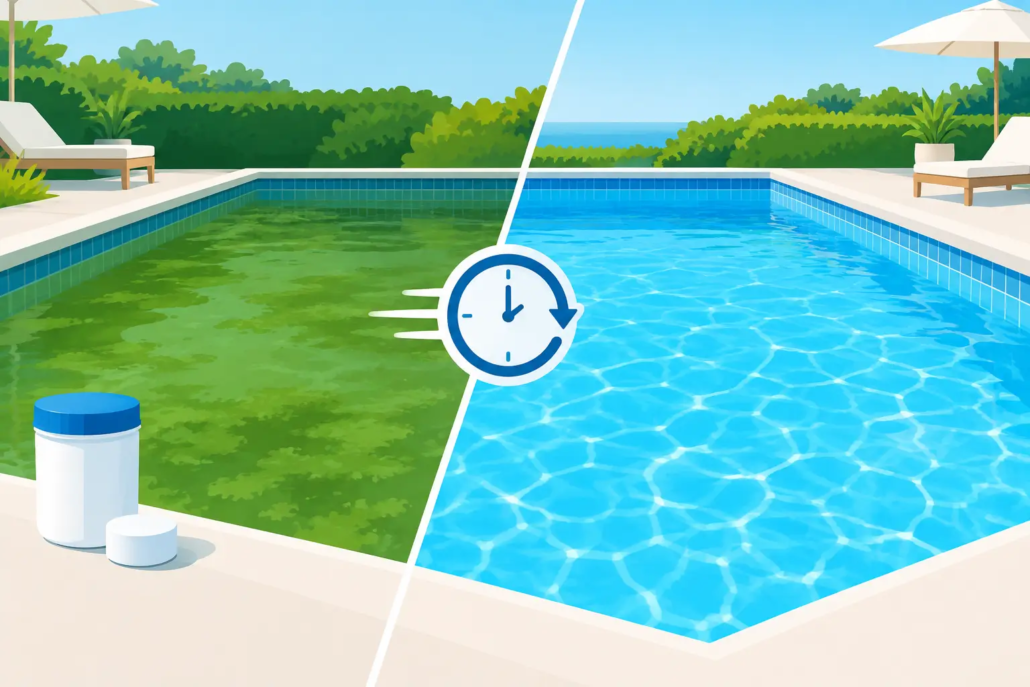
A pool can turn green quickly after an Orlando downpour, a hot weekend, or a missed chemical check. Pool algae treatment 48 hours is possible in many cases, but the result depends on more than adding a bag of shock and hoping for the best. The right diagnosis, chemical balance, circulation, and cleanup all have to work together.
For homeowners, landlords, and property managers, the goal is not simply to make water look better for a day. It is to restore a healthy, clear pool and stop the conditions that allowed algae to take over in the first place.
Can Pool Algae Treatment Work in 48 Hours?
Yes, a green pool can often be restored to clear water within 48 hours when the algae problem is caught early to moderately advanced, the equipment is working correctly, and treatment begins with accurate water testing. That timeline is most realistic for a pool with a functioning pump and filter, adequate water level, and no underlying equipment failure.
A quick recovery is less predictable when water is dark green or nearly black, debris is packed across the floor, the filter is clogged or damaged, or the pool has been neglected for an extended period. Yellow or mustard algae can also be stubborn, especially around steps, ladders, corners, and shaded areas. Black algae requires extra attention because it attaches to surfaces and forms a protective layer.
The phrase “48 hours” should mean active recovery, not a single chemical visit. Algae removal takes monitoring. As algae dies, the water may shift from green to cloudy blue or gray before it becomes crystal clear. That is progress, but the remaining particles still need to be filtered out or removed from the pool.
Why Pools Turn Green So Fast in Central Florida
Algae is always looking for an opportunity. Central Florida provides plenty of them: warm water, intense sun, heavy rain, wind-blown debris, and high bather activity. A few days of low sanitizer can be enough for algae spores to multiply into a visible problem.
Rainwater can dilute chlorine and change water balance. Leaves, pollen, grass clippings, and organic debris give algae material to feed on while using up available chlorine. If the pump is not running long enough, or the filter cannot keep up with the debris load, water circulation suffers. Low-flow areas become the first places algae gains a foothold.
This is why a pool may look fine on Friday and green by Monday. It is not always a sign that a homeowner did something wrong. It does mean the pool needs a prompt, complete response before the issue becomes more expensive to correct.
What a Proper 48-Hour Algae Recovery Involves
Fast results come from a sequence, not a shortcut. The treatment plan should match the pool’s water condition, algae type, surface, and equipment. A professional begins by checking sanitizer levels, pH, alkalinity, stabilizer, calcium hardness, and the overall condition of the water.
Start With the Water Balance
Chlorine is less effective when pH is too high, so correcting pH is often an early step. The pool also needs enough available sanitizer to kill active algae, not just maintain normal weekly conditions. The exact product and dose depend on the pool volume and test results. More chemicals are not automatically better. Over-treating can create additional balance problems, damage surfaces, or leave water uncomfortable for swimmers.
Brush, Vacuum, and Remove Debris
Algae clings to pool walls, steps, tile lines, light niches, and floor surfaces. Brushing breaks that attachment and exposes algae to sanitizer. Skimming and vacuuming remove leaves and settled material that can keep consuming chlorine.
This physical cleanup matters as much as chemical treatment. If dead algae and debris remain in the water, the pool may stay cloudy even after the algae is no longer alive.
Keep Water Moving and Filtering
The pump and filter do much of the clearing work after treatment. Continuous or extended circulation may be needed during a green-pool recovery, depending on the condition of the pool and the equipment. Cartridge filters may need cleaning, while sand or DE filters may need backwashing or servicing as they collect dead algae.
A pool that has been shocked but not properly filtered often looks better briefly, then stalls at cloudy water. Clear water requires both sanitized water and effective filtration.
Recheck and Adjust
The first treatment is not the finish line. Chlorine demand can remain high while algae is dying, so levels should be checked again and adjusted as needed. A follow-up inspection also confirms whether algae remains in corners, on surfaces, or inside areas with weak circulation.
For a true pool algae treatment in 48 hours, this follow-through is what separates a dependable recovery from a temporary improvement.
What Can Slow Down Results
Some pools need more than two days, and that is not a failure. It is a sign that the pool needs the level of care its condition requires. The biggest factor is how much algae is present. Light green water may clear quickly, while a pool that looks like pea soup has a far greater amount of organic material to kill and remove.
Equipment condition matters too. A pump with poor pressure, a torn filter element, a clogged impeller, or a suction-side air leak can prevent proper circulation. In those cases, chemical treatment alone will not solve the underlying issue.
Pool surfaces can also affect the timeline. Plaster, pebble, vinyl, and fiberglass each require appropriate brushing methods and chemical care. Aggressive treatment that may be reasonable for one situation can be unsuitable for another. That is why a one-size-fits-all “green pool fix” can lead to disappointment.
Finally, swimmers should stay out until the water is properly balanced, clear enough to see the main drain, and safe for use. A pool should not reopen simply because the color looks improved. Healthy water is the standard.
When to Call for Professional Green Pool Recovery
Hands-on pool owners can handle a mild algae issue when they have reliable test results, working equipment, and time to monitor the pool closely. Chemical-only service can also be a good fit for homeowners who want professional water management while handling brushing and cleaning themselves.
Professional recovery is the better choice when the water is heavily green, cloudy, or dark; when algae keeps returning; or when you do not have the time to manage repeated testing and equipment checks. For rental homes and commercial properties, a fast and documented response is especially valuable. Guests, residents, and visitors expect a pool that is clean, safe, and ready to enjoy.
Pro Backyard Pool provides green-pool recovery for Orlando-area customers with a clear goal: restore the pool to healthy, clear water while identifying the maintenance issue that caused the algae to grow. Certified, insured service and post-service updates help owners know what was done and what the pool needs next.
Keep Algae From Coming Back
Once the water is clear, routine care protects the investment. Consistent sanitizer levels, balanced pH, dependable circulation, clean filters, and regular brushing make algae far less likely to return. Weekly attention is especially helpful during Florida’s rainy season, when water chemistry can shift quickly.
For families, that means less time troubleshooting green water and more time enjoying the backyard. For property managers, it means fewer complaints and fewer emergency calls. The most affordable algae treatment is often the one you never need because the pool stayed consistently blue, clear, and clean.
If your pool is starting to look dull, cloudy, or green, act before the problem settles in. Early treatment gives you the best chance of getting back to clear water quickly and relaxing beside a pool that is ready to enjoy.








Leave a Reply
Want to join the discussion?Feel free to contribute!