

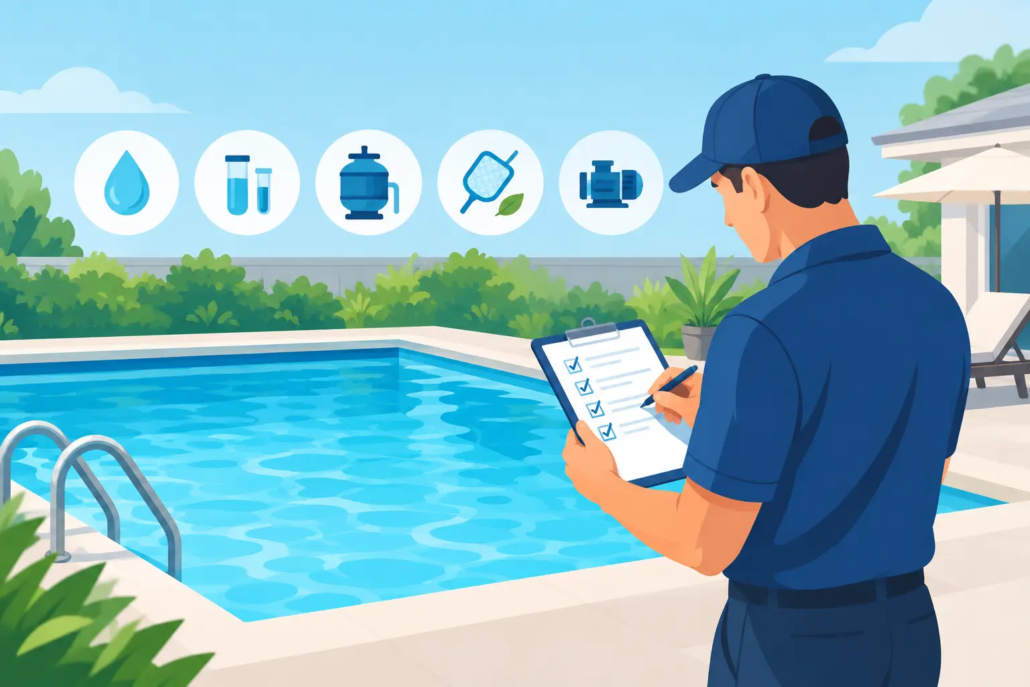
A pool can look blue on Monday and develop a cloudy tint, algae growth, or a chemical imbalance by the weekend – especially during an Orlando summer. That is why a weekly pool service review matters. It gives you a clear record of the work completed, the condition of your water, and any small concern that needs attention before it becomes an expensive repair or a green-pool recovery.
For homeowners, landlords, and property managers, a good service review should do more than say that the pool was cleaned. It should provide useful proof that your pool is being cared for properly and help you feel confident that it is ready for family, guests, residents, or tenants.
Why a Weekly Pool Service Review Matters
Central Florida pools work hard year-round. Heat, rain, pollen, leaves, sunscreen, heavy swimmer use, and afternoon storms can all affect water chemistry quickly. Even a well-maintained pool needs regular attention to stay blue, clear, and healthy.
A detailed review creates accountability. You should know whether the technician tested and adjusted the water, emptied debris from baskets, brushed surfaces, checked circulation, and noticed any equipment concerns. When these details are documented after each visit, it is easier to spot patterns such as recurring low chlorine, rising calcium levels, poor water circulation, or a filter that may need service.
The review also makes communication simpler. You do not have to wonder whether a visit happened while you were at work or away from the property. A post-service report with photos lets you see the condition of the pool and understand what was done without having to be there.
What Should Be Included in Weekly Pool Service?
The exact work depends on your service plan. A chemical-only plan is a practical choice for hands-on pool owners who prefer to handle brushing, skimming, and vacuuming themselves. Full-service weekly maintenance is better for customers who want the work managed from start to finish.
Either way, the service review should clearly match the service you selected. A quality report should not leave you guessing what is included.
Water testing and chemical treatment
Healthy pool water starts with accurate testing. During a weekly visit, the technician should check the chemistry that affects sanitation, comfort, and equipment protection. This commonly includes chlorine or another sanitizer level, pH, alkalinity, stabilizer, and other readings as needed for your pool’s condition.
The report should indicate that chemicals were tested and adjusted, not simply state that chemicals were added. Chemicals are not one-size-fits-all. Recent rainfall, hot temperatures, pool parties, refill water, and nearby landscaping can all change what your pool needs that week.
Balanced chemistry helps prevent algae, protects pool surfaces and equipment, and keeps water more comfortable for swimmers. If a reading is outside the ideal range or needs follow-up, that should be communicated clearly. Good pool care is proactive, not a surprise after the water turns green.
Skimming, brushing, and vacuuming
A full weekly cleaning visit should address the debris and buildup that make a pool look neglected. Surface skimming removes leaves, insects, and floating debris before they sink and add to the filter load. Emptying skimmer and pump baskets supports proper circulation and helps protect the pump.
Brushing is equally important, even if the pool looks clean. Algae can begin on walls, steps, tile lines, ladders, and corners where circulation is weaker. Regular brushing disrupts that early growth before it spreads. Vacuuming removes dirt and settled debris from the floor, helping the water stay bright instead of dull or hazy.
A useful service report can note the visible condition of the water and surfaces, particularly if storm debris, heavy leaf drop, or algae treatment required additional attention.
Filter, circulation, and equipment observations
Your pool equipment is what keeps treated water moving. Without dependable circulation, sanitizer cannot do its job effectively, and debris can settle in areas that do not receive enough flow.
A technician should keep an eye on the pump, filter pressure, timer or automation settings, skimmer function, visible plumbing leaks, and return flow. Not every weekly visit requires equipment repair, but early observations are valuable. A small drip, unusual pump noise, weak return flow, or steadily increasing filter pressure may point to a problem that is easier and less costly to handle early.
For commercial pools and managed properties, these observations are especially helpful. Reliable documentation supports maintenance planning and gives property managers a clearer record of pool conditions for residents and guests.
Photos Turn a Service Visit Into Proof
Photos are one of the most useful parts of a weekly pool service review. They give you a quick, honest view of the pool after service, whether you live at the property, manage it from another location, or simply do not have time to inspect it each week.
A clear photo can show blue water, a clean surface, and a cared-for pool area. If the technician finds an issue, photos can also explain it better than a vague note. A picture of algae on a step, heavy storm debris, a damaged basket, or a visible equipment leak helps you understand why a recommendation was made.
This level of communication matters because pool service should feel dependable, not invisible. At Pro Backyard Pool, post-service updates help customers see the care that goes into keeping their pools clean, safe, and ready to enjoy.
How to Read Your Weekly Pool Service Review
You do not need to be a pool expert to get value from your report. Start by looking for three things: confirmation that the scheduled service was completed, the condition of the water, and any recommendations that need your attention.
If the report says the water was balanced and the pool was cleaned, look for supporting details or photos. If it notes that a chemical was added, that can be normal after rain, high usage, or changing temperatures. One adjustment is not necessarily a concern. Repeated notes about the same issue are worth discussing because they may point to a larger cause.
For example, recurring algae can mean the pool needs better circulation, more consistent sanitizer, a cleaner filter, or more brushing in shaded areas. A repeated low-water note may indicate evaporation, a leak, or frequent splash-out. High filter pressure may mean the filter needs cleaning. The right response depends on the situation, but a good provider should explain the next step in plain language.
Questions to Ask When Something Is Flagged
When a report includes a recommendation, ask what the issue means now and what could happen if it is delayed. You can also ask whether the concern affects water safety, equipment performance, or the appearance of the pool.
It helps to know whether the work is urgent, recommended soon, or simply something to monitor. For instance, a minor equipment observation may not need immediate repair, while a failing pump, active leak, or recurring algae problem should not wait. Clear answers make it easier to choose the right course of action without pressure or confusion.
If you maintain part of the pool yourself through a chemical-only plan, ask what you can do between visits. You may need to empty baskets after a storm, maintain a proper water level, or brush an area that receives less circulation. Shared responsibility works best when expectations are clear.
Signs Your Pool Service Needs Better Documentation
A brief text saying “pool done” may be enough for some owners, but it does not provide much useful information when a water-quality or equipment problem develops. Consider asking for better reporting if you regularly receive no confirmation of service, no water-condition notes, no photos, or unclear recommendations.
You should also be concerned if your pool repeatedly becomes cloudy or green without an explanation of why. Weekly service is designed to prevent avoidable problems. Weather can create unexpected challenges, and some equipment failures happen without warning, but consistent communication helps prevent a small issue from staying hidden.
A dependable review should leave you with a simple answer: your pool is clear and cared for, or here is what needs attention next. That peace of mind is one of the real benefits of recurring pool service. When you can see the work, understand the condition of your water, and get timely answers, you can spend less time worrying about maintenance and more time enjoying your backyard pool.








Leave a Reply
Want to join the discussion?Feel free to contribute!