

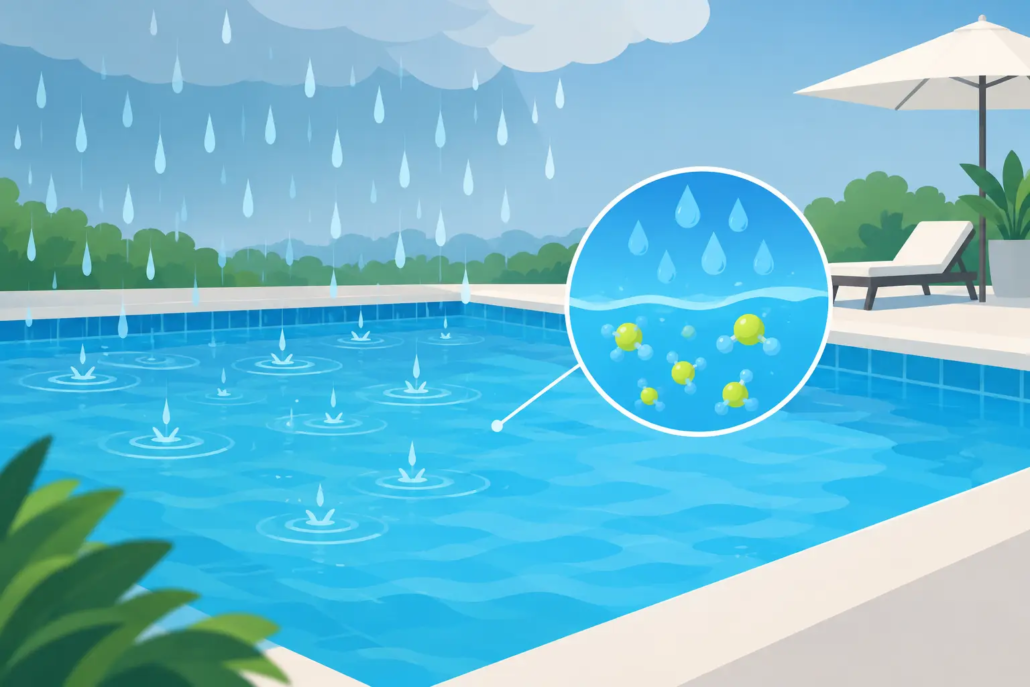
A Central Florida downpour can turn a calm, clear pool into a mess of leaves, pollen, and cloudy water in one afternoon. So, can rain dilute chlorine? Yes, but usually not in the simple way pool owners expect. Rain can add enough water to slightly reduce chlorine concentration, especially after a long storm or repeated wet-weather days. More often, though, the bigger issue is what the storm carries into the pool and how that added debris affects your water chemistry.
For Orlando-area pool owners, the practical question is not whether every rain shower requires extra chlorine. It is whether the pool still has enough active sanitizer to stay clear, healthy, and algae-free after the weather passes.
Can Rain Dilute Chlorine Enough to Cause Problems?
Rainwater adds water to the pool, and adding water can lower the concentration of dissolved chemicals, including free chlorine. The effect depends on the amount of rain, the surface area of your pool, and whether the pool was already near the proper chemical range.
A brief summer shower generally does not add enough water to make a meaningful difference in a typical residential pool. A heavy afternoon storm, several days of rain, or a pool that has overflowed can have a more noticeable effect. If water is lost through an overflow drain or splashed out after a storm, the pool may lose chemically treated water at the same time fresh rainwater enters.
Still, rain dilution alone is rarely the main reason a pool suddenly turns green. Chlorine is more likely to fall behind because storm runoff, wind-blown debris, pollen, dust, lawn material, and organic matter create a higher sanitizer demand. Chlorine gets used up fighting contaminants. If the pool begins with low free chlorine, that extra demand can give algae an opening.
That is why a pool can look fine before a storm and look dull or slightly green a day or two later. The weather did not necessarily wash all the chlorine away. It changed the workload inside the water.
What Florida Rain Changes in Pool Water
Rainwater is not automatically dirty, but it is not chemically neutral once it reaches a pool. During a storm, it combines with airborne particles and collects whatever is sitting on the pool deck, screen enclosure, roofline, and nearby landscaping. In Central Florida, that can mean heavy pollen, oak leaves, palm debris, fertilizer residue, and fine soil.
The most common post-rain changes are lower free chlorine, higher organic load, diluted stabilizer and salt levels after substantial rainfall, and shifts in pH or total alkalinity. The exact direction of those shifts varies. Rain itself is often mildly acidic, yet runoff and debris can push water chemistry in other directions. That is why guessing based on the weather is less reliable than testing.
Cloud cover also deserves attention. Less direct sunlight can reduce some chlorine loss during the storm, but warm Florida temperatures do not stop. Warm water, debris, and low sanitizer levels remain a favorable combination for algae growth. Once algae takes hold, a standard chlorine tablet or a small chemical adjustment may not be enough to restore clear water quickly.
Heavy rain versus a passing shower
A passing shower usually calls for observation, not panic. Check the water level, empty the skimmer basket if needed, and test the water on your normal schedule. If the pool is clear and free chlorine is in range, there may be nothing else to do.
After a heavy storm, treat the pool more proactively. Remove leaves and visible debris promptly, brush affected surfaces, run circulation long enough to filter fine material, and test free chlorine, pH, and total alkalinity. If the pool has overflowed, also check cyanuric acid, commonly called stabilizer, because significant dilution can reduce its level over time.
For a saltwater pool, rain does not remove salt by itself. But overflowing does. If the pool loses water through an overflow outlet, its salt concentration can drop, and the salt system may have a harder time producing chlorine. Do not add salt based on appearance alone. Test first.
What to Do After Rain Dilutes Pool Chlorine
The best response is measured and timely. Start by looking at the pool. Is the water clear? Are there leaves in the skimmer? Is the water level above the middle of the tile line or approaching the coping? A visual inspection catches issues that a chemical test alone cannot.
Next, test free chlorine and pH. For most stabilized residential pools, free chlorine should generally be maintained in a range appropriate for the pool’s cyanuric acid level. A basic target often used by homeowners is 1 to 3 ppm, but a pool with higher stabilizer may need a higher free-chlorine level to sanitize effectively. Your test results need to be read together, not one number at a time.
If free chlorine is low, add the appropriate chlorine product according to the label and your pool volume. Avoid tossing in extra chemicals simply because it rained. Overcorrecting can create a new problem, including overly high chlorine, unbalanced pH, or a damaged pool surface and equipment over time.
If the pool is full of debris, skim it before relying on chemicals to do the work. Organic debris consumes chlorine, and large leaves can stain surfaces if they sit too long. Empty the skimmer and pump baskets as needed, then keep the pump running so the filter can capture the fine particles stirred up by the storm.
When water looks cloudy, brush the walls, steps, and floor before or during filtration. Brushing breaks loose early algae growth and helps sanitizer reach areas where contaminants settle. If the pressure on your filter rises above its normal operating range, clean or backwash it according to the manufacturer’s guidance.
When Rain Is Not the Real Problem
If your pool repeatedly loses chlorine after ordinary rain, the storm may be revealing an existing maintenance issue. Common causes include an undersized chlorine routine, a failing salt cell, poor circulation, clogged filtration, high stabilizer, or algae that is starting to grow before it becomes visible.
A strong chlorine smell is not proof that the pool has too much chlorine. It can indicate chloramines, which form when chlorine reacts with contaminants. In that situation, the pool may need a more complete chemical assessment rather than another tablet in the feeder.
Green water is another sign to act quickly. Waiting for a cloudy or green pool to clear on its own usually gives algae more time to spread and can increase the amount of treatment needed. A professional diagnosis can identify whether the issue is low sanitizer, phosphates, circulation, filtration, chemistry balance, or a combination of conditions.
For homeowners who prefer to handle cleaning but want confidence in the chemistry, a chemical-only service can keep testing and treatment consistent through Florida’s rainy months. Full weekly pool care adds debris removal, brushing, equipment checks, and documented service so small storm-related changes do not become a larger recovery job. Pro Backyard Pool provides both options for local homeowners and managed properties that want reliable, clear water without the guesswork.
A Simple Rainy-Season Routine for Clear Water
During the summer storm season, consistency matters more than reacting dramatically to every forecast. Keep the water level at its normal operating point, maintain regular circulation, and make sure baskets and filters are not restricted before storms arrive. A clean filter and steady water flow give chlorine a better chance to do its job.
After significant rain, inspect the pool within a day. Remove debris, test the water, and correct only what the test supports. Pay closer attention after several rainy days in a row, a storm that causes overflow, or a period when the pool receives heavy landscaping debris.
Commercial pools, rental properties, and community pools may need more frequent checks because bather load adds another source of chlorine demand. A storm followed by a busy weekend can change water conditions much faster than rain alone. Reliable records and routine testing are especially useful for property managers who need safe, presentable water for residents and guests.
Rain is part of pool ownership in Orlando, but it does not have to lead to cloudy water or an algae problem. Treat each storm as a reason to inspect and test, not a reason to guess. A few timely steps after the rain can keep your pool blue, clear, and ready for the next sunny afternoon.








Leave a Reply
Want to join the discussion?Feel free to contribute!