

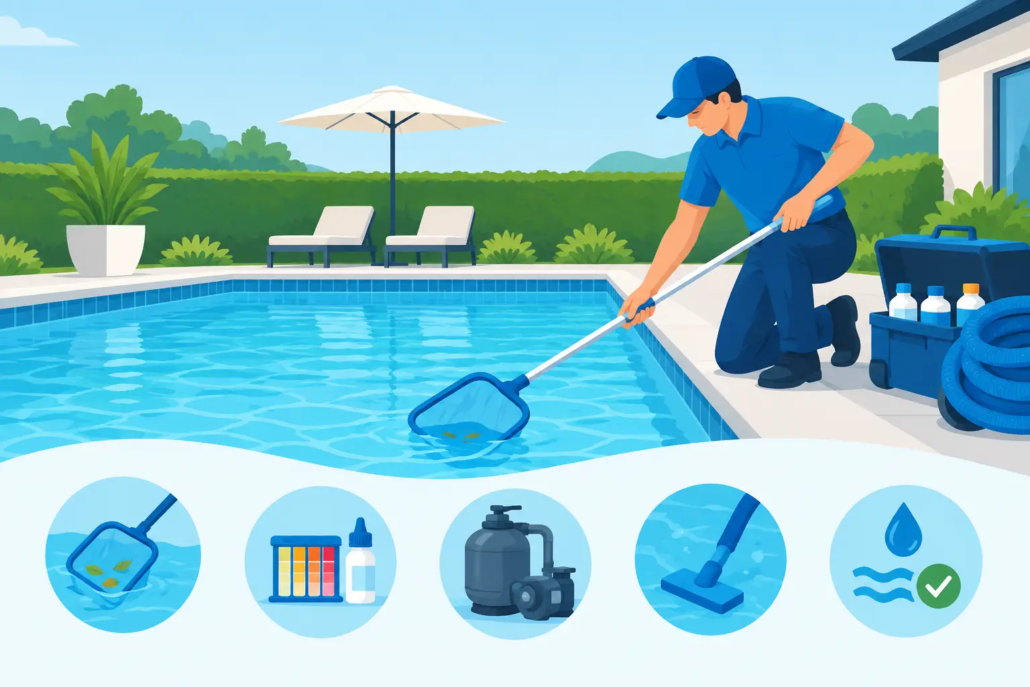
A pool can look fine on Saturday and develop cloudy water, algae, or a chemistry problem before the next weekend. Central Florida heat, afternoon rain, heavy pool use, and falling debris give small issues plenty of opportunity to grow. So, what does weekly pool service include? For most homeowners, it means a trained technician handles the routine work that keeps the water healthy, the pool attractive, and the equipment protected.
A full-service plan is more than a quick skim of the surface. It is a consistent maintenance visit built around water testing, cleaning, circulation checks, and early problem detection. The exact scope can vary by pool, service package, and current water conditions, but dependable weekly care should leave you with a pool that is clear, clean, and ready to enjoy.
What Does Weekly Pool Service Include on Each Visit?
A professional weekly visit usually begins with the water itself. Your technician tests key levels such as chlorine or sanitizer, pH, alkalinity, stabilizer, and other readings that affect water comfort, clarity, and sanitation. These numbers work together. A pool may have enough chlorine but still struggle with cloudy water or irritated eyes if pH and alkalinity are out of range.
After testing, the technician adds the appropriate treatment products to bring the water back into balance. The goal is not simply to add chemicals every week. It is to apply what the pool needs based on current conditions, weather, bather load, and the condition of the water. This helps prevent algae and reduces the chance of a more expensive recovery later.
Cleaning is the other major part of full weekly service. Depending on the pool and the debris around it, a technician typically skims leaves, bugs, and surface debris; empties skimmer and pump baskets; brushes the walls, steps, tile line, and other problem areas; and vacuums the pool as needed. Brushing matters because algae can begin clinging to surfaces long before it becomes an obvious green-pool problem.
The technician should also look over the circulation system. That includes checking that the pump is running properly, the filter is maintaining reasonable pressure, returns are moving water, and visible equipment is free of immediate concerns. Good circulation helps distribute sanitizer and keeps debris from settling in corners. It also gives the service team a chance to flag a small equipment issue before it becomes a no-pump emergency.
Why Weekly Care Matters in Orlando
Orlando pools work hard for much of the year. High temperatures make sanitizer burn off faster, while frequent rain can dilute pool chemicals and push pH out of balance. Pollen, oak leaves, landscaping debris, sunscreen, and swimmers all add contaminants that the water must process.
Skipping care for a week or two does not always cause a visible problem immediately. That is what makes it risky. Water chemistry can drift quietly, filters can become loaded with debris, and algae can establish itself on a shaded wall or step. Once the water turns green, the solution often requires extra chemicals, repeated treatment, filtration time, and more attention than a regular maintenance visit.
Weekly service is preventive care. It gives the pool a consistent reset before normal Florida conditions can turn a manageable issue into a disruption to your backyard plans.
The Difference Between Full Service and Chemical-Only Service
Not every pool owner needs the same level of support. Some hands-on homeowners prefer to skim, brush, vacuum, and empty baskets themselves. For them, chemical-only service can be a practical option. A technician tests the water and manages the chemistry so the owner can handle the physical cleaning between visits.
Full weekly service is better suited to homeowners who want the pool fully managed, landlords who need a reliable maintenance record, and busy families who would rather spend their free time in the water than maintaining it. It combines chemical management with the cleaning tasks that keep the pool looking cared for week after week.
The trade-off is simple: chemical-only service can cost less, but it requires consistent effort from the homeowner. If brushing and debris removal get delayed, balanced chemistry alone may not keep the pool looking its best. Full service costs more because it removes more work and more uncertainty from your routine.
What May Not Be Included in a Standard Weekly Visit
A clear service agreement matters because regular maintenance and repair work are not the same thing. Weekly service generally focuses on ongoing cleaning, water care, and visual equipment checks. Major repairs, replacement parts, leak detection, filter cleaning or replacement, and specialty treatments may be separate services.
For example, a technician may notice that a pump is making an unusual sound or that a cleaner is not moving correctly during the regular visit. Identifying and reporting that concern is part of good service. Replacing a motor, repairing a leak, or installing a new cleaner is typically quoted separately.
The same applies to severe algae. A lightly dusty surface may be addressed during routine service, but a fully green pool often needs a dedicated green-pool recovery treatment. The pool may need extra brushing, shock treatment, filtration support, and follow-up attention to restore safe, clear water quickly.
Before choosing a provider, ask how they handle chemicals, filter cleaning, salt-cell care, phosphate treatment, and repair recommendations. There is no one-size-fits-all answer, but a professional company should explain what is included before work begins.
Service Reports Help You Know Your Pool Was Cared For
You should not have to guess whether someone visited your pool or what they found. A dependable pool service provides clear communication after the visit, especially when water conditions change or equipment needs attention.
Post-service reports with photos give homeowners and property managers useful proof of completed care. They can show the pool’s condition, document a concern, and help you follow maintenance history over time. For rental homes and commercial properties, that documentation can be especially valuable when several people are responsible for the property.
At Pro Backyard Pool, clear service updates are part of making pool care less stressful. You know the pool has been serviced, and you have a direct record if a technician recommends additional attention.
How to Tell if Your Weekly Service Is Working
The best sign is not just blue water. Healthy pool water should look clear, feel comfortable, and stay free of recurring algae. Baskets should not be overflowing, debris should not collect for days, and basic equipment concerns should be communicated promptly.
A pool can be blue yet still have poor chemistry, weak circulation, or early algae growth. That is why consistency and professional testing matter more than appearance alone. A reliable technician looks at the conditions behind the color of the water.
You should also expect responsiveness. Rainstorms, heavy use, equipment alerts, and sudden water changes happen. The value of a recurring service relationship is having a local team that understands your pool’s history and can respond before a small issue steals another weekend.
Choosing the Right Weekly Plan
Start with how much pool work you honestly want to do. If you enjoy the hands-on tasks and can stay consistent, chemistry support may be enough. If you want to relax, protect your equipment, and keep the pool ready for family and guests, full weekly cleaning and maintenance is usually the better fit.
Also consider the environment around your pool. A screened pool with little debris may need less physical cleanup than an uncovered pool beneath mature trees. Pools used often by children, guests, or tenants may need closer chemistry management. The right plan should reflect the pool’s real conditions, not just its size.
Weekly pool service is ultimately a promise of fewer surprises. When water is tested, surfaces are cleaned, circulation is checked, and concerns are reported consistently, your pool stays where it belongs: a clean, healthy place to enjoy your backyard.








Leave a Reply
Want to join the discussion?Feel free to contribute!